


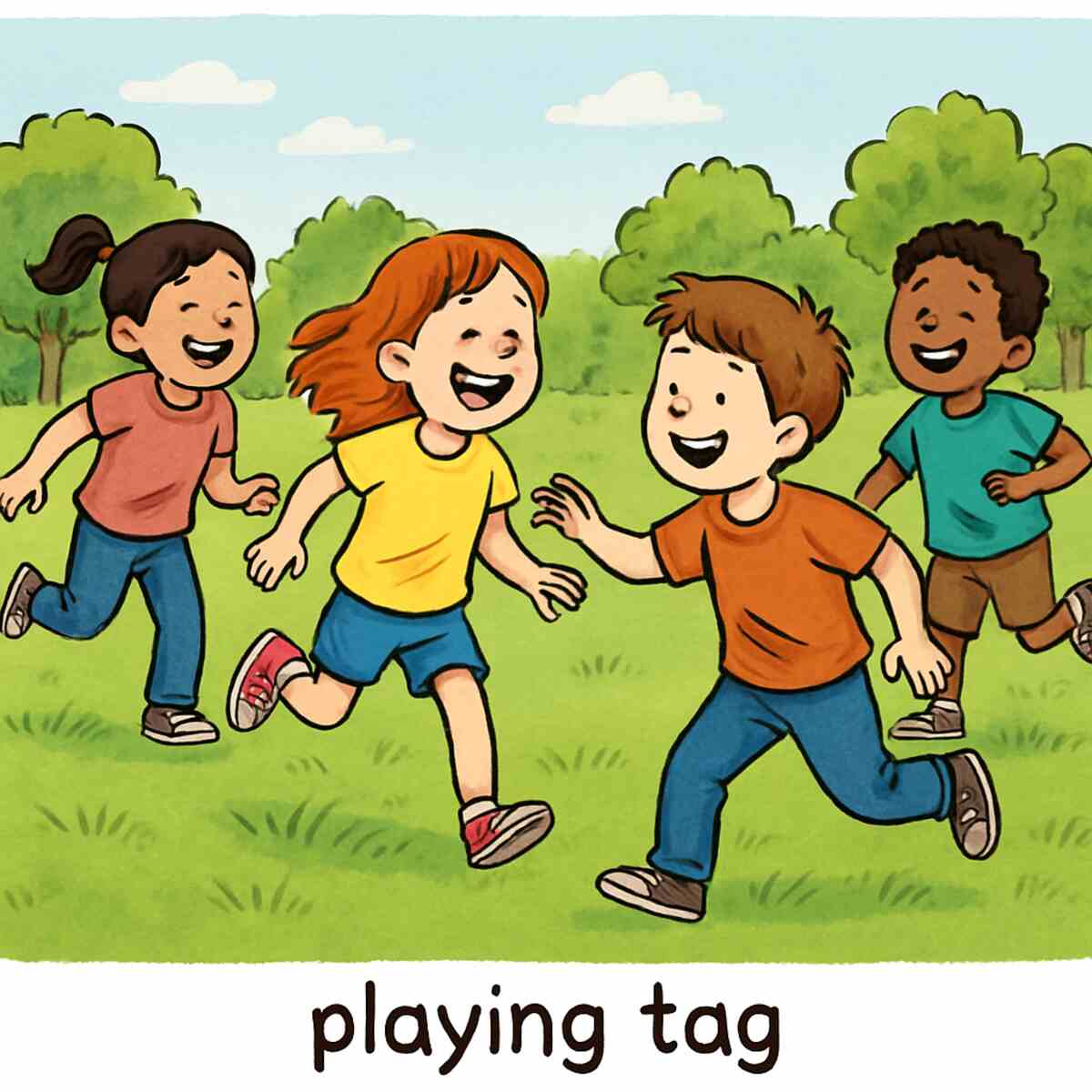
The landscape of youth physical activity has shifted dramatically over the past few decades. With the rise of highly structured, competitive youth sports leagues, we sometimes lose sight of the most foundational element of physical development: play. Before a child can master the intricate offside trap in soccer or execute a perfect pick-and-roll in basketball, they must first understand how to move their bodies, interact with others, and navigate physical space. This is where the magic of minor games comes into play. Get the Best information about slot online.
Minor games—often characterized by their simple rules, focus on participation, and minimal equipment requirements—are the unsung heroes of physical education, community recreation, and playground culture. They are the essential stepping stones that bridge the gap between unstructured free play and formalized major sports.
In this comprehensive guide, we will dive deep into the world of minor games. We will explore their profound physical, cognitive, and social benefits, examine strategies for implementing them in various environments, and provide actionable tips for educators, coaches, and parents. Whether you are looking to revamp your physical education curriculum, manage a large group of energetic children, or simply bring some active joy to your community, understanding the power of minor games is your ultimate starting point.
What Are Minor Games? Defining the Concept
To fully appreciate their value, we must first understand what minor games are. Unlike “major” sports (such as regulation basketball, soccer, or rugby), which require specific field dimensions, specialized equipment, complex rulebooks, and specialized officiating, minor games are highly adaptable and intuitively simple.
They are fundamentally designed for rapid engagement. Within a minute of explanation, players can jump right into the action. This category encompasses everything from traditional backyard games played at family barbecues to structured low organization games for physical education utilized by teachers to keep dozens of students active simultaneously.
Core Characteristics of Minor Games
- Simple Rules: The instructions can usually be explained in under two minutes.
- Minimal Equipment: They often require only a few cones, a ball, or no equipment at all.
- High Activity Levels: The structure inherently maximizes “time on task,” ensuring that players are moving rather than standing in line waiting for a turn.
- Easily Modifiable: Rules can be changed on the fly to increase or decrease difficulty, accommodate different numbers of players, or fit varying spatial constraints.
- Focus on Fun over Outcome: While there may be winners and losers, the primary objective is enjoyment and skill practice, not competitive dominance.
Interestingly, we can draw a compelling parallel between these physical activities and the digital realm. Much like how indie games in the video game industry rely on innovative, focused mechanics and creativity rather than massive budgets to captivate players, minor games rely on clever, stripped-down rules rather than expensive equipment or regulation fields to create joy. Both prove that you do not need complex, resource-heavy environments to foster deep engagement.
The Physical Benefits: Building Better Movers
The primary objective of early physical education is not to forge elite athletes, but to create confident, competent movers. Minor games are the perfect vehicle for this.
Developing Fundamental Movement Skills
At the core of physical literacy are fundamental movement skills (FMS). These include locomotor skills (running, jumping, hopping), object control skills (throwing, catching, kicking), and stability skills (balancing, twisting).
Developing fundamental movement skills through play is highly effective because children are intrinsically motivated to participate. When a child is playing “Freeze Tag,” they are not thinking about the biomechanics of deceleration or agility; they are simply trying to avoid being caught. The game naturally elicits rapid changes of direction, bursts of speed, and spatial calculation.
Enhancing Cardiovascular Health
Because minor games are designed to keep everyone moving, they are excellent tools for cardiovascular conditioning. Traditional sports drills often involve long lines, where a child might be active for only a few seconds before returning to the back of the queue. Minor games eliminate these bottlenecks, keeping the heart rate elevated in a fun, disguise-the-fitness manner.
Spatial Awareness and Body Control
Navigating a shared space with other moving bodies requires complex neurological calculations. Improving spatial awareness with modified rules is a staple of minor game design. For example, by restricting a game of tag to a smaller grid, players must constantly scan their environment, anticipate others’ movements, and adjust their speed and trajectory. Adding rules like “you can only move by skipping” or “you must stay three feet away from the boundary lines” further refines this bodily awareness.
The Psychological and Social Benefits
Beyond the physical advantages, minor games are a powerful catalyst for cognitive and social-emotional development. The flexible nature of these activities creates a safe sandbox for children to experiment with social dynamics.
Cognitive Development and Tactical Thinking
Minor games are incredibly effective at teaching problem-solving. Because the rules are simple, players can quickly transition from asking “How do I play?” to “How do I succeed?” This naturally introduces children to basic tactics.
Educators frequently use the tactical games model for beginner athletes within minor games. Instead of teaching a skill in isolation (e.g., passing a ball back and forth), the skill is taught within the context of a game (e.g., passing a ball to keep it away from a defender). This teaches athletes not just how to perform a skill, but when and why to use it.
Fostering Teamwork and Cooperation
While many minor games are individualistic (like free-for-all tag), many others are explicitly designed to require collaboration. Fostering teamwork through cooperative challenges teaches children communication, empathy, and leadership. Games where players must link arms to move, or pass a single object without letting it touch the ground, force participants to work together, listen to one another, and support their peers’ efforts.
Reducing Performance Anxiety
Full-field, formalized sports can be intimidating for beginners. The pressure of letting down a team, combined with complex rules, can lead to anxiety and dropout. Minor games strip away this pressure. The stakes are low, the games are short, and mistakes are easily brushed off and forgotten by the next round. This creates a psychologically safe environment where children are willing to take risks and try new movements.
Bridging the Gap: From Play to Major Sports
One of the most strategic uses of minor games is acting as a bridge to more complex, organized sports. By breaking down the mechanics of a major sport into digestible, game-based chunks, educators can build competence progressively.
Lead-Up Activities
Lead up activities for skill development are minor games designed specifically to mimic the demands of a major sport. For instance, “Endzone Ball” is a minor game where players pass a ball down the field to score by catching it in the end zone, but running with the ball is not allowed. This game serves as a brilliant lead-up to basketball, netball, or ultimate frisbee, teaching the concepts of creating space, moving off the ball, and intercepting passes without the complex dribbling rules of the full sport.
The Power of Small-Sided Games
When transitioning children into sports like soccer or hockey, educators frequently debate small sided games vs full field competition. The consensus in modern coaching is overwhelmingly in favor of small-sided minor games (e.g., 3v3 or 4v4 on a small field).
The benefits of modified sports for children through small-sided games are profound:
- More Touches: With fewer players on the field, every individual touches the ball significantly more often, accelerating skill acquisition.
- Simplified Decisions: A 3v3 game presents far fewer variables to process than an 11v11 game, allowing children to understand tactical concepts more easily.
- Increased Engagement: There is nowhere to “hide” in a small-sided game. Everyone must attack, and everyone must defend, fostering well-rounded athletes.
Creating an Inclusive Environment
Physical activity should be accessible to everyone, regardless of their physical abilities, confidence levels, or prior experience. Minor games are inherently adaptable, making them the perfect tool for inclusive education.
Strategies for Inclusive Play
Knowing how to facilitate inclusive group play is a vital skill for any facilitator. Here are key strategies to ensure everyone is involved and successful:
- Rule Modification: If a child has limited mobility, modify the rules of tag so that taggers must walk, or create “safe zones” where players can rest without penalty.
- Equipment Adaptation: Use larger, softer, or brightly colored balls to assist children with visual impairments or developing motor coordination.
- Varying Roles: Ensure games have multiple roles. If a game involves running and throwing, ensure there is a role for a “director” or a “goalie” that requires less continuous locomotion while still keeping the child actively engaged in the game’s outcome.
Icebreakers and Social Integration
At the beginning of a school year or sports season, bringing a new group of children together can be challenging. Engaging icebreakers for physical literacy use minor games to break down social barriers. Games that require learning names, safely navigating around peers, and shared laughter are incredible tools for building a positive group culture from day one. When children laugh together during a silly, low-stakes game, they are much more likely to support one another as the physical tasks become more challenging.
Designing and Adapting Your Own Minor Games
You do not need an encyclopedia of games to be a great facilitator; you only need a few core game concepts and the ability to adapt them. The best physical educators are masters of modification.
The STEPS Framework
When designing or tweaking a minor game, use the STEPS framework to adjust the difficulty and focus:
- S – Space: Make the playing area larger to increase cardiovascular demand and make evasion easier, or smaller to increase the frequency of interactions and demand quicker reaction times.
- T – Task: Change the objective. Instead of “tagging as many people as possible,” the task becomes “tagging while hopping on one foot.”
- E – Equipment: Swap a hard soccer ball for a soft foam ball, a frisbee, or even a rubber chicken. Different equipment completely changes the biomechanical demands of the game.
- P – People: Alter team sizes. Play 2v4 to give the defense an advantage, or create uneven teams to challenge the stronger players.
- S – Speed: Modify the allowed speed. “Walking tag” is a phenomenal way to force tactical positioning over pure athletic speed.
Making Playgrounds Safer
Traditional playground games are part of childhood heritage, but some require modernization to ensure physical and emotional safety. Adapting classic playground games for safety is a common task.
Take traditional Dodgeball, for example. In its classic form, it often features human targets, encourages throwing at heads, and relies on human elimination (meaning the children who need the most practice get eliminated first and sit on the bench).
- The Minor Game Adaptation: Transform it into “Medic” or “Pinball.” In “Medic,” eliminated players sit down where they are hit, and a designated “medic” can save them by tagging them. In “Pinball,” the goal is not to hit other players, but to knock over foam pins guarded by the opposing team. These adaptations preserve the throwing and dodging mechanics but remove the negative social and safety aspects.
Warming Up Smartly
Before any physical education class or sports practice, the body needs to be primed. Instead of boring laps around the field, utilize warm up drills with minimal equipment. Minor games like “Tail Tag” (where players tuck a bib into their shorts and try to snatch others’ bibs while protecting their own) elevate the heart rate, mobilize joints, and instantly engage the participants’ minds without requiring elaborate setups.
Practical Applications: Settings for Minor Games
The versatility of minor games means they can be deployed effectively across a wide variety of challenging environments.
Managing Large Groups
One of the most daunting tasks for a physical educator or camp counselor is managing a massive group of kids simultaneously. Recreational activities for large student groups must be carefully selected. Games that require multiple small balls (like “Clean Out Your Backyard,” where two massive teams try to throw all the soft balls onto the opponent’s side of the gym) keep 30, 40, or even 50 kids highly active at the exact same time, with zero wait time.
The Indoor Dilemma
Weather is unpredictable. Rain, extreme heat, or snow can quickly ruin a planned outdoor field session. Having a toolkit of indoor active games for primary schools is essential. When confined to a gymnasium or even a cleared-out classroom, space is at a premium. Games must focus on controlled movements and safety. Activities like “Four Corners,” “Musical Hoops” (a safe variation of musical chairs using hula hoops on the floor), or “Simon Says” with complex balance and stretching commands are excellent ways to burn off energy in a confined space safely.
Comprehensive Minor Game Lesson Plans
To help you put these concepts into practice, here are three complete lesson plans for introductory sports activities utilizing minor games. These plans follow a standard structure: Warm-Up, Main Activity (with progressions), and Cool Down.
Lesson Plan 1: Introduction to Invasion Games (Focus: Spatial Awareness & Passing)
Target Age: 8-12 years. Equipment Needed: 4 cones to mark boundaries, 1 soft foam ball or netball, and coloured bibs for two teams.
- Warm-Up (5 mins): “Pac-Man Tag”
- Setup: Use the existing lines on a gym floor or lay down a grid of flat markers.
- Rules: Players can only move along the lines. Two players are “Ghosts” (taggers), the rest are “Pac-Men.” If tagged, a Pac-Man sits on the line and becomes a roadblock that others must jump over.
- Purpose: Elevates heart rate and enforces improving spatial awareness with modified rules (looking ahead, planning routes).
- Main Activity (15 mins): “Keep Away” / “Endzone Ball”
- Setup: Divide players into two equal teams. Create a rectangular playing area with an “endzone” at each end.
- Rules: The team with the ball must pass it to each other. Rule 1: You cannot run with the ball (you can only pivot). Rule 2: The defending team cannot snatch the ball from hands, only intercept passes in the air.
- Scoring: A point is scored when a team successfully catches a pass inside their opponent’s endzone.
- Progressions: Require at least three passes before a team can score. Add a rule that the ball must be passed backward at least once before moving forward.
- Purpose: This is a classic example of lead up activities for skill development, teaching the fundamental concepts of basketball, netball, and ultimate frisbee.
- Cool Down (5 mins): “Statue Balance”
- Rules: Students walk slowly around the space. When the teacher calls out a body part (e.g., “One foot and one hand!”), students must freeze in a balanced position using only those points of contact for 10 seconds.
Lesson Plan 2: Target and Throwing Accuracy (Focus: Object Control & Teamwork)
Target Age: 6-10 years Equipment Needed: Dozens of soft foam balls (or rolled-up socks), bench/mats, foam bowling pins or tall cones.
- Warm-Up (5 mins): “Mirror Me”
- Setup: Students pair up face-to-face.
- Rules: One student is the leader and performs various locomotor movements in place (high knees, arm circles, hopping). The partner must mirror them exactly. Swap leaders every 30 seconds.
- Purpose: A quick warm up drill with minimal equipment that focuses on observation and body control.
- Main Activity (15 mins): “Castle Takedown”
- Setup: Divide the gym in half. Each team builds a “castle” using foam pins, hoops, and mats at the back of their territory.
- Rules: Teams throw soft balls across the center line to try and knock down the opponent’s castle. Players cannot cross the center line.
- Safety Adaptation: If a player is hit by a ball, they must do 5 jumping jacks before they can throw again (this avoids elimination and keeps everyone active).
- Purpose: Combines overhead throwing mechanics with the excitement of destruction. It serves as a fantastic alternative, adapting classic playground games to be safer (providing the thrill of dodgeball without targeting human bodies).
- Cool Down (5 mins): “Pass the Squeeze”
- Rules: Students sit in a circle holding hands, eyes closed. The teacher starts a “squeeze” by gently squeezing the hand of the student to their right. The students pass the squeeze around the circle in silence.
Lesson Plan 3: Cooperative Challenges (Focus: Communication & Problem Solving)
Target Age: 10-14 years Equipment Needed: Hula hoops, a large beach ball or balloon, a parachute (optional).
- Warm-Up (5 mins): “Knot Tangled”
- Setup: Groups of 6-8 students stand in a tight circle.
- Rules: Everyone reaches into the center and grabs the hands of two different people (not the person standing right next to them).
- Objective: Without letting go of hands, the group must communicate and twist, step over, and duck under arms to untangle the knot and form a perfect circle.
- Purpose: Engaging icebreakers for physical literacy that immediately force verbal communication and teamwork.
- Main Activity (15 mins): “Toxic Swamp Bridge” & “Keep-Up”
- Phase 1 (Toxic Swamp): Give a group of 5 students 4 hula hoops. They must cross the gym (the toxic swamp) without stepping outside the hoops. They must figure out how to pass the back hoop to the front to create a moving bridge.
- Phase 2 (Keep-Up): The entire class must keep a giant beach ball in the air for 50 consecutive taps. Rule: The same person cannot touch the ball twice in a row, and no speaking is allowed.
- Purpose: Fostering teamwork through cooperative challenges. These games remove the element of “Team A vs. Team B” and unite the class against a common puzzle.
- Cool Down (5 mins): “Guided Breathing”
- Rules: Students lie flat on their backs and place a small beanbag on their stomachs. They practice deep diaphragmatic breathing, watching the beanbag rise and fall slowly.
Overcoming Common Challenges in Minor Games
While minor games are incredibly beneficial, facilitating them is not always seamless. Educators and coaches often run into specific hurdles. Here is how to navigate the most common challenges.
Dealing with Hyper-Competitiveness
Even in low-stakes games, some children will treat the activity as if it were the Olympic finals. This can intimidate less-confident peers and undermine the game’s inclusive nature.
- Solution: Shift the focus of the praise. Instead of praising the child who scores the most points or tags the most people, loudly and publicly praise the child who demonstrates the best teamwork, the most creative evasion, or the best sportsmanship. Furthermore, utilize games where the teams constantly change, preventing cliques from forming and dominating.
The “Elimination” Problem
Many classic minor games (like “Simon Says” or traditional “Tag”) rely on elimination. The tragic irony of elimination games is that the children who are eliminated first are almost always the ones who need the most physical practice.
- Solution: Implement “re-entry” rules. If a child is tagged, they freeze with their legs apart. Another child can “unfreeze” them by crawling through their legs. Or an eliminated player must perform a side task (e.g., shooting a basketball into a hoop or completing three star jumps) to buy their way back into the game. This ensures continuous participation.
Limited Space and Equipment
Not every program has access to a massive field and a closet full of brand-new sporting goods.
- Solution: Embrace low organization games for physical education. If you have no equipment, focus on locomotor games: Tag variations, shadow running, and cooperative balance challenges. If you have limited space, rely on indoor active games for primary schools that limit running speed, such as those requiring heel-to-toe walking, crab-walking, or crawling. Remember, the constraint often breeds creativity.
The Future of Physical Education: A Return to Play
As we look toward the future of youth health and physical education, it is clear that pushing children into highly specialized, formalized sports at a very young age is often counterproductive. It leads to burnout, overuse injuries, and a high dropout rate from physical activity by early adolescence.
The antidote to this trend is a dedicated return to play. By utilizing minor games, we strip away the pressure, the complex rulebooks, and the elitism of major sports. We replace them with laughter, continuous movement, creativity, and inclusion.
Minor games teach a child that their body is an instrument of joy, capable of incredible things. They teach children how to negotiate rules with peers, how to win with grace, and how to lose without despair. They are the laboratory where physical literacy is truly forged.
Conclusion
From the simplest game of backyard games like tag to complex lead up activities for skill development, minor games are the foundational building blocks of a physically active life. They offer unparalleled physical, cognitive, and social benefits, creating a safe and inclusive environment where every child can thrive.
By embracing the benefits of modified sports for children, utilizing the tactical games model for beginner athletes, and prioritizing developing fundamental movement skills through play, educators, coaches, and parents can foster a lifelong love of movement in the next generation.
Remember, you don’t need a stadium or expensive gear to make a difference. With a little space, a few simple rules, and a willingness to adapt, you have everything you need to facilitate incredible, life-enriching minor games. So grab a few cones, gather a group, and let the games begin!