


Imagine never stopping at a gas station again on a freezing Tuesday morning. Instead, you simply wake up every day to a completely full tank, just by plugging in your car the same way you charge your smartphone overnight. This fundamental shift is why veteran owners often say residential power access is the most significant lifestyle upgrade of bringing an EV home. Best way to find the electrician near me.
Relying on public chargers might seem familiar if you are used to weekly gas station runs, but it quickly becomes expensive and time-consuming. According to recent utility provider studies, topping up at home during off-peak hours dramatically reduces your long-term fuel costs compared to commercial stations. Your driveway suddenly transforms into the most convenient, budget-friendly “pump” in town.
Getting that perfect overnight charge requires understanding what equipment actually matches your daily driving habits. Every vehicle includes a basic cord for Level 1 charging, which acts like a slow water drip from a standard three-prong wall outlet, adding only three to five miles of range per hour. Upgrading to Level 2 charging provides the real speed you need, delivering a full battery by morning using the same power as a heavy-duty clothes dryer.
Turning your garage into this highly efficient private fueling station demands more than just buying the right hardware off the shelf. You have to evaluate your home’s electrical “budget” to ensure it can handle the extra power demands safely. Evaluating an EV charger installation involves making critical decisions about how your house currently distributes electricity.
Navigating this home upgrade means balancing three essential pillars for a successful project: absolute safety, reliable charging speed, and overall cost-effectiveness. Industry data reveals that keeping your total home charging station cost manageable requires avoiding common electrical shortcuts. A poorly planned setup can easily lead to tripped breakers or, much worse, serious fire hazards in your walls.
Deciding whether to tackle this project yourself or hire a licensed professional is the first major hurdle you will face. While swapping out a basic light fixture might be a fun weekend endeavor, safe electric vehicle charging often requires a qualified expert to handle high-voltage wiring and local permits. Powering your daily commute from the comfort of your own home requires understanding the equipment and your electrical panel.
Why Your Standard 120V Wall Outlet is Too Slow for Modern Life
When you bring a new electric vehicle home, the provided cord usually plugs right into a standard wall outlet. This setup, known as Level 1 charging, is like a slow drip filling a massive bucket. Because it uses the same power connection as a bedside lamp, the energy flows at a deliberate, creeping pace commonly called trickle charging.
While convenient, this method often fails to match modern commuting demands. A typical Level 1 cord adds only 3 to 5 miles of range per hour. To see if this speed works for your lifestyle, compare your daily driving needs to what you actually recover while parked:
- Overnight sleep (8 hours): Recovers roughly 24 to 40 miles.
- Evening downtime (4 hours): Adds a mere 12 to 20 miles.
- Full weekend park (48 hours): Barely fills an empty, long-range battery.
For someone who works remotely or drives a plug-in hybrid with a much smaller battery, this trickle might suffice. However, if your daily commute tops 40 miles or you own a fully electric vehicle, relying on a basic plug means you will eventually fall behind on your weekly mileage. Waking up to a fully charged car requires upgrading from a lamp-sized trickle to a much stronger, dedicated flow.
The ‘Appliance Anchor’: Why Your EV Charger Needs a Dryer-Sized Circuit
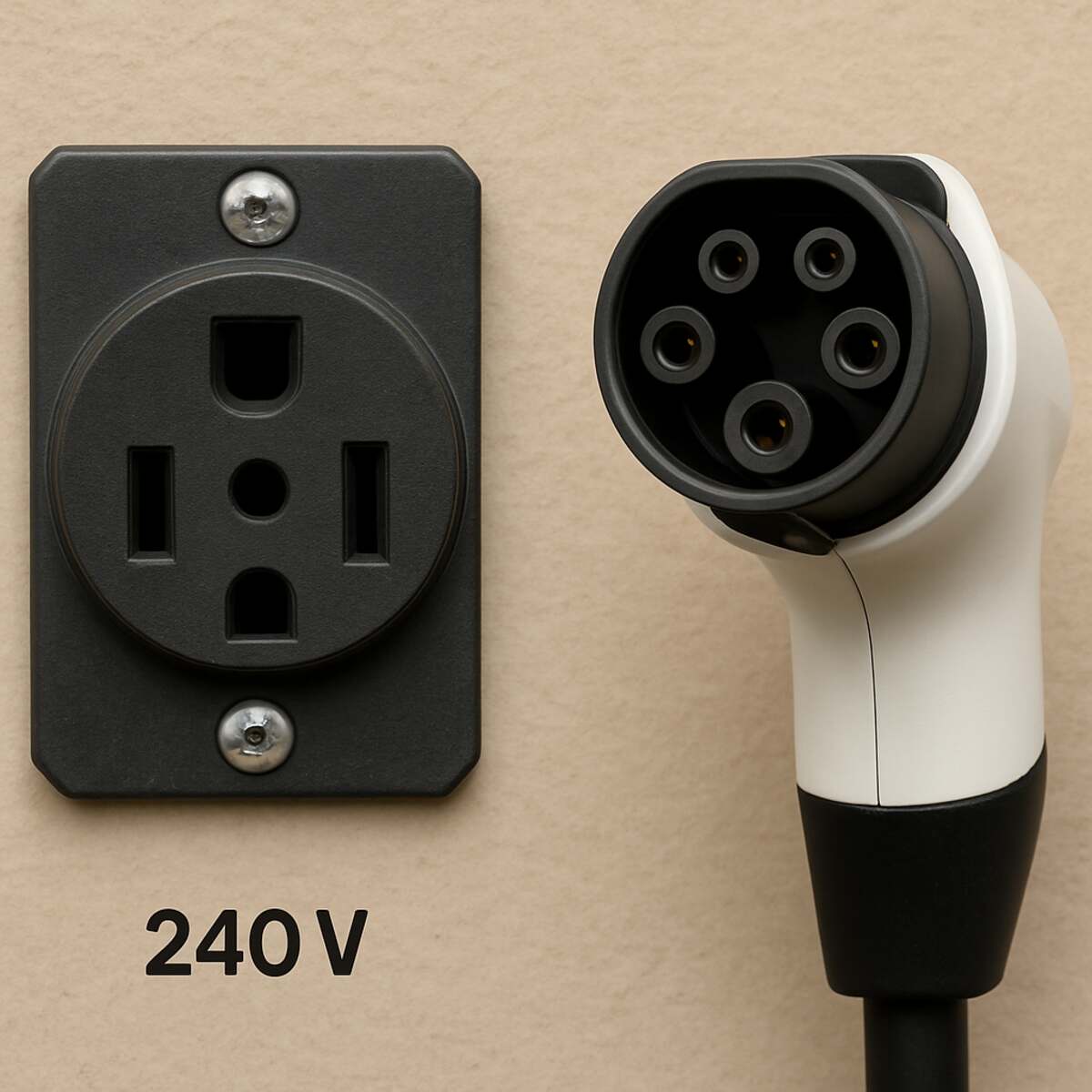
Upgrading to faster charging means using the same power required by your heavy-duty household appliances. Think of an electric car charger like your clothes dryer or oven. These machines demand far more energy than a bedside lamp, which is why they plug into a larger, specialized connection called a 240V outlet. If your standard wall plug is a trickling garden hose, a 240V connection is a fire hose. Doubling the voltage effectively widens the electrical pipe, allowing a massive amount of power to flow into your vehicle and establishing the foundation for Level 2 charging.
Because this wider pipe pushes continuous, heavy electricity for hours at a time, it cannot share space with other devices. Your new charger requires a dedicated circuit in your electrical panel, meaning its breaker slot is reserved exclusively for your car. Imagine trying to run a clothes dryer and a large power saw on the exact same line; the system would instantly overload and shut down for safety. Giving your vehicle a private power lane ensures safe, uninterrupted energy flow overnight. Once this robust connection is installed, the daily convenience is massive, drastically cutting your wait time.
Level 1 vs. Level 2 Charging: Cutting Your Wait Time by 80%
Eliminating range anxiety starts with understanding battery recovery. Electric vehicle capacity is measured in kilowatt-hours (kWh)—think of one kWh as a “gallon” of electricity. A standard wall outlet (Level 1) acts like a slow drip. If you drive a typical 40-mile daily commute, simply replacing the energy you just used takes over 10 hours.
Upgrading to a 240V connection completely flips this math in your favor. Because Level 1 vs Level 2 charging is like comparing a garden hose to a fire hose, your home charging speed jumps to a massive 20 to 40 miles of range hourly. This superior charge rate recovery guarantees a completely full battery by morning. Here is what a typical 10-hour overnight charge looks like for popular electric vehicles:
- Standard Sedan (Tesla Model 3): Level 1 adds roughly 40 miles; Level 2 adds 300+ miles (100% full).
- Large Truck (Ford F-150 Lightning): Level 1 adds roughly 30 miles; Level 2 adds 200+ miles.
Matching equipment to your habits ultimately depends on your lifestyle. If you work remotely and only take short neighborhood trips, that slow Level 1 drip might suffice. However, for most busy families and daily commuters, Level 2 is the only reliable way to ensure your vehicle is always ready. Verifying your home can handle the upgrade is the next critical step.
Checking Your Power Budget: Does Your Electrical Panel Have Room to Grow?
Your home’s electrical panel acts like a household budget, but instead of dollars, it manages amperage (amps). Every time your air conditioner, electric oven, or clothes dryer runs, you spend a portion of that available power. Adding a fast Level 2 charger is like taking on a major new monthly expense. Before installation begins, we must ensure your house has enough total “income” to cover this new energy draw safely.
While an electrician will handle the official load calculations, you can perform a quick visual inspection to gauge your starting point. Here is how to check your current capacity:
- Find the Main Breaker: Look for the largest single switch, typically located at the very top or bottom of the panel.
- Check the Amp Rating: Read the number printed on that main switch. Modern homes usually feature 200 amp service, which is ideal. Older 100-amp panels often struggle to support fast charging.
- Look for Empty Slots: Specific circuit breaker requirements for a Level 2 charger mandate two empty vertical spaces stacked together to fit a dedicated double-pole breaker.
Discovering a completely full panel or a 100-amp limit is common and easily solvable. Upgrading electrical panel for electric cars is a routine job for licensed professionals that instantly boosts your home’s safety and property value. Once you confirm your power budget is secure, you must decide how to physically connect the hardware to your garage wall.
The NEMA 14-50 Outlet: Why Plug-In Chargers Offer the Most Flexibility
Rather than permanently wiring a box to your wall, many homeowners choose a plug-in EV charger using a heavy-duty receptacle called a NEMA 14-50 outlet. If you have ever looked behind a large clothes dryer, you have seen this massive four-pronged outlet. The biggest advantage here is total flexibility. Should your unit ever fail, or if you decide to move to a new home, you simply unplug the device and take it with you. This setup transforms your residential charging station into a portable appliance, making future upgrades incredibly easy.
Convenience requires strict safety standards, as charging a car pulls continuous, heavy power for hours on end. Your electrician must install a robust, industrial-grade receptacle to prevent the plastic from melting under that constant stress. Additionally, modern safety codes mandate a GFCI (Ground Fault Circuit Interrupter) breaker for all outlet installations. Just like the reset buttons on your bathroom outlets, a GFCI instantly cuts power if it detects a leak, protecting you from shocks in a damp garage. While this plug-in method is highly versatile, some drivers prefer a permanent setup built to deliver absolute maximum charging speeds.
Hardwired Installation: The Gold Standard for Power and Reliability
Leaving the wall plug behind, a hardwired setup connects directly to your home’s electrical panel. This dedicated hardware, known as an EVSE (Electric Vehicle Supply Equipment), skips the physical outlet entirely. This direct link safely unlocks high-amperage charging, easily pushing 48 amps of power. For your daily routine, that means charging speeds roughly 20 percent faster than typical plug-in models, guaranteeing a completely full battery by morning.
Safety is another major benefit of removing that traditional wall connection. Eliminating the physical plug removes a vulnerable midpoint where heat can build up during hours of heavy use. A hardwired EV charger acts as a permanent, seamless extension of your house, much like a central air conditioning unit. This continuous line reduces electrical wear and tear, ensuring a reliable charge every time you park.
For drivers parking outside, this permanent installation method is an absolute necessity. Without exposed electrical prongs, a hardwired unit functions as a fully weatherproof charging port that safely withstands rain, ice, and snow. Once you choose between the flexibility of a plug and the raw power of hardwiring, your next task is finding the perfect installation spot.
The Best Locations for Your Driveway or Garage Charger to Maximize Convenience
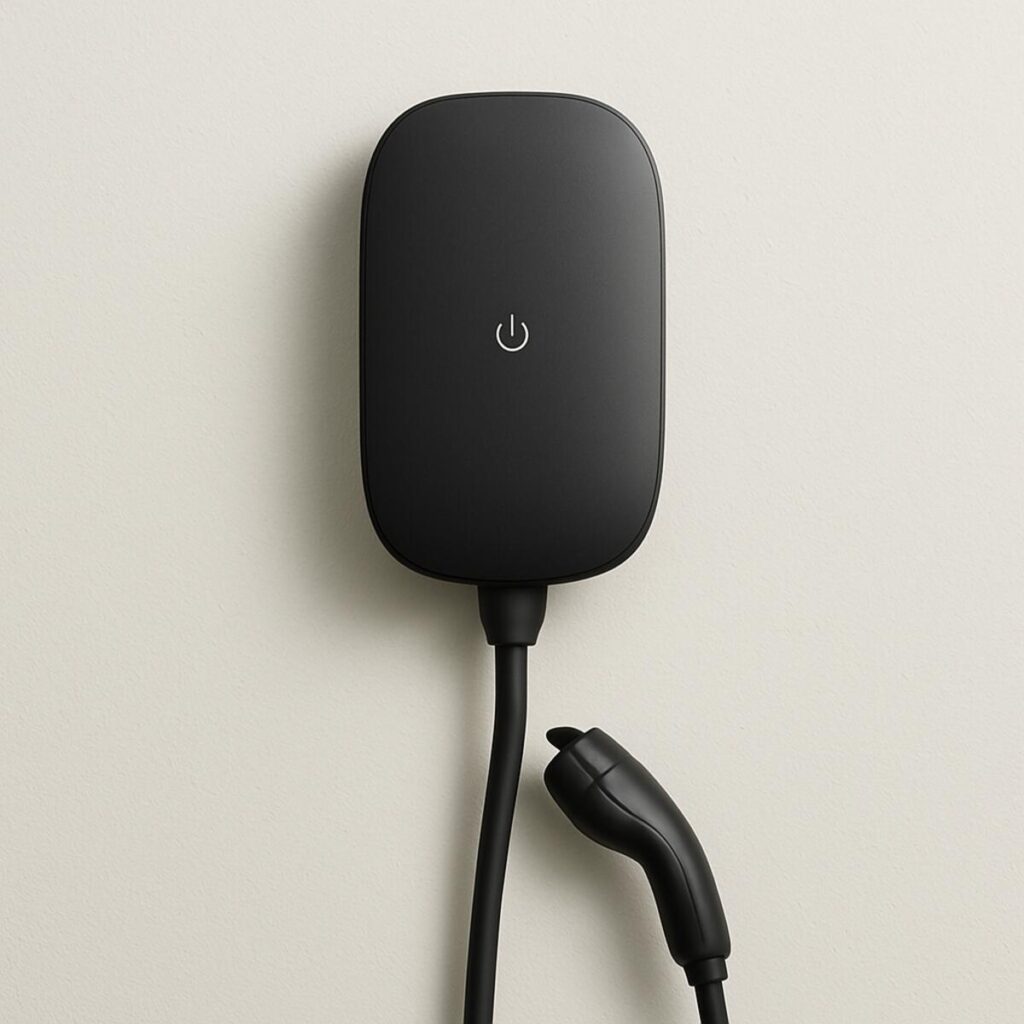
Bringing your new EV home only to realize the cord won’t reach is a frustrating beginner’s mistake. Unlike standard gas tanks, EV charging ports can be located on the front grille, the driver’s side fender, or the rear bumper. Perfecting your garage charging setup starts with knowing your car’s specific port orientation.
Map out the physical space before your electrician arrives. You can use this simple checklist to pinpoint the smartest spot for your driveway charger placement:
- Panel Proximity: Keep the charging unit as close to your home’s main electrical panel as possible to significantly minimize installation costs.
- Cable Length: Standard cords run 18 to 25 feet. Ensure the cable reaches the port effortlessly without pulling tight, even if a second car is parked in the way.
- Parking Habits: Decide if you prefer pulling straight in or backing up, as this dictates whether the charger belongs near the garage door or on the back wall.
Smart EV cable management also prevents dangerous tripping hazards while you are carrying groceries in the dark. Mounting a simple wall hook keeps your walkway clear and stops the expensive plug from getting run over by your tires. Exterior installations demand extra planning and weatherproofing against the elements to ensure safe outdoor charging in rain and snow.
Weatherproofing Secrets for Safe Outdoor Charging in Rain and Snow
Not having a garage doesn’t mean you can’t wake up to a full battery, but your equipment must survive Mother Nature. When shopping for an outdoor EVSE, you will see a “NEMA rating,” which simply measures how well the box blocks water and dust. A NEMA 3R rating is like a sturdy raincoat, handling regular rain and snow perfectly fine. However, if you face sideways blizzards or frequently pressure-wash your driveway, you should invest in a NEMA 4 rated charger. This higher rating acts like a sealed vault, offering superior protection against severe weather and direct water sprays.
Mounting the unit correctly is just as crucial for long-term safety. If you choose a plug-in model instead of a hardwired connection, your electrician must install a heavy-duty “in-use” cover over the exterior outlet to protect the plug while it is connected. They will also seal the back of the station to prevent hidden water ingress from rotting your siding or shorting electrical connections. Proper weatherproofing guarantees safe fueling during heavy downpours. With the outside secured, ensuring your house has enough power prevents unexpected electrical overhauls.
Smart Load Management: How to Avoid a $3,000 Main Panel Upgrade
Discovering your home’s electrical panel is maxed out usually means a stressful quote for a $3,000 upgrade. Your home’s electrical system acts like a monthly budget, and adding a heavy-duty charger might push you into the red. Instead of paying for a massive physical overhaul to increase your total power limit, you can use a clever piece of technology called an energy management system to act as a financial advisor for your electricity.
These systems, often utilizing a device called a Demand Charge Controller (DCC), monitor your home’s main power lines in real-time. If the house gets too close to its maximum limit, the smart load management software simply pauses or slows down your EV charging until the heavy appliances turn off. This technology is a lifesaver in everyday power-heavy scenarios:
- Running your central AC during a scorching summer evening.
- Baking dinner in your electric oven while running the clothes dryer.
- Kicking on a power-hungry electric water heater right after a shower.
By dynamically balancing your usage, this approach lets you charge safely overnight when other appliances are asleep, helping you entirely avoid a panel upgrade. Your electrician can quickly determine if a DCC fits your specific layout and saves you money. However, high-voltage electricity is completely unforgiving when deciding what you can handle safely.
The DIY Temptation: What You Can Actually Handle Safely (And What You Can’t)
Staring at an installation quote might make you wonder if you can tackle the project yourself. It is perfectly safe for a handy homeowner to handle the physical prep work, like measuring wall space, mounting the heavy charging bracket, or securing empty plastic piping along the wall. However, crossing the line from physical labor to electrical connections is where the boundaries of DIY vs professional electrical work strictly change. Your 240-volt system carries enough power to run major appliances, making direct contact with the main panel strictly off-limits to amateurs.
To lower costs without compromising safety, you can act as the project manager and partner with a licensed electrician. By clearing your garage and doing the heavy lifting yourself, you drastically reduce their billable hours. The professional simply arrives to pull the high-voltage wire, connect the breaker, and file the necessary homeowner electrical permits. Securing these local permits guarantees a city inspector will double-check the safety of the installation, giving you total peace of mind before you ever plug in your expensive new car.
Bypassing that official sign-off comes with severe financial consequences that stretch far beyond immediate EV charger DIY risks. If an unpermitted amateur wiring job sparks a fire, your homeowner’s insurance provider has the legal right to deny your damage claim entirely. Taking shortcuts to save a few hundred upfront dollars could leave you personally liable for replacing your home due to the hidden risks of improper high-voltage wiring.
The High Cost of Free: Hidden Risks of Improper DIY High-Voltage Wiring
While your new charger uses the same 240-volt power as your clothes dryer, how it pulls energy is vastly different. A dryer cycles on and off to maintain heat, giving wires a chance to rest. Conversely, an EV charger is a continuous load electrical device. It pulls maximum power for hours without a single break. This relentless electricity flow generates significant heat, leaving absolutely no margin for error in the electrical panel connections.
Due to this sustained heat, metal components inside the box constantly expand and contract. If a DIYer tightens a wire using just a standard hand screwdriver, it will inevitably wiggle loose over time. Professionals meet exact torque requirements using specialized tools to prevent this creeping separation. A loose connection creates friction and extreme temperatures that eventually melt the surrounding plastic casing—a dangerous chain reaction known as thermal runaway.
Recognizing early warning signs of a failing installation is crucial for strict EV charger fire safety. If you notice flickering garage lights, a faint burning plastic smell, or a wall unit that feels unusually hot to the touch, disconnect your vehicle immediately. Taking a gamble on improper wiring simply isn’t worth the catastrophic risk to your property. Fortunately, an official oversight system exists to catch these invisible mistakes and protect your property.
Why Local Building Permits Protect Your Home’s Resale Value
Navigating local building permits might feel like bureaucratic red tape, but this official oversight is actually a homeowner’s ultimate safety net. If an unpermitted EV charger sparks an electrical fire, your insurance provider could completely deny the claim, leaving you financially responsible for the damage. Furthermore, an official electrical inspection acts as an independent, free quality-check on your hired contractor’s work, ensuring those strict continuous-load safety requirements were properly met. Bypassing this crucial step might save a little time upfront, but it frequently leads to expensive code-violation fines or complicated delays that threaten your home resale value when a future buyer discovers undocumented high-voltage wiring.
To guarantee your private fueling station is safe and legal, your chosen professional should confidently guide you through a typical three-step sequence:
- Application: Your pro submits a detailed wiring and panel plan to the city for initial approval.
- Rough-in: An inspector examines the exposed wires and panel connections before any drywall is patched.
- Final Inspection: The city reviews the completed, powered-on setup to verify it operates flawlessly.
Because a qualified professional will handle this entire documentation process for you, choosing the right expert is your most important task.
Vetting Your Electrician: 5 Questions to Ensure They Understand EV Tech
Finding a trustworthy professional is about more than just checking online reviews. While any licensed electrician can wire a standard ceiling fan, EV chargers pull massive amounts of power for hours at a time, requiring specialized knowledge. You want a pro who holds an electrician certification for EV installations, such as the EVITP (Electric Vehicle Infrastructure Training Program). This credential guarantees they understand the unique thermal stress these heavy-duty chargers place on your home’s electrical panel.
When hiring an electrician for EV projects, use this specific script to verify their expertise during the interview:
- “Are you EVITP certified?” Look for formal EV-specific training.
- “Are you familiar with the 80% rule?” Because chargers run for hours, they are “continuous loads” and can only safely use 80% of a circuit’s maximum capacity.
- “Will you handle the permit application?” A confident pro always manages the official paperwork.
- “Do you recommend a hardwired or plug-in setup?”
- “Is the equipment you recommend UL-certified?” This guarantees the hardware has passed strict independent safety testing.
Providing these professionals with clear photos of your electrical panel and garage upfront helps secure an accurate, fixed-price quote. Once you select the right contractor, they will determine the exact hardware and circuit requirements your home can safely support.
The 40-Amp Circuit Requirement: Understanding Breakers and Wire Gauge
When reviewing your electrician’s plan, you might notice a confusing detail: your new 40-amp charger is paired with a 50 amp circuit. This isn’t a mistake—it is a mandatory safety standard. Because vehicles pull power continuously for hours, circuit breaker requirements for 40 amp chargers enforce an 80% capacity limit to prevent overheating. Never let anyone simply install a larger breaker on an existing standard circuit to save money. That “over-sized” breaker creates a severe fire hazard because it allows more electricity through than the existing wires can safely carry.
Delivering that massive power safely requires specific copper lines, commonly called the wire gauge for EV installations. If you compare it to plumbing, standard outlet wiring is like a garden hose, while EV charging requires thick, heavy-duty 6-gauge wire that acts like a high-pressure fire hose. This robust wiring handles the intense electrical current without melting. Once your contractor correctly installs the thick wiring and properly sized breaker, your garage is transformed into a safe, high-speed private fueling station. With this solid electrical foundation now in place, you can explore powering your vehicle sustainably.
Solar-Powered Charging: How to Fuel Your Car with Zero Utility Cost
Generating your own fuel at home is the ultimate convenience. By pairing your vehicle with solar panels, you can essentially drive on sunshine. Commuting 40 miles a day? Adding just six to eight solar panels to your roof generates enough power to completely offset that daily drive. This creates an efficient solar powered car charging setup, turning your garage into an independent, self-sustaining energy station.
Timing matters when harnessing sunlight. Modern smart EV chargers feature “excess solar” modes, meaning they communicate with your panels and only charge your car when the sun is brightest, completely avoiding paid grid electricity. If you work away from home during the day, your utility company’s net metering program acts like a financial battery. You send daytime solar power back to the neighborhood grid for account credits, using those exact credits to pay for your overnight charging.
Investing in both technologies simultaneously delivers a phenomenal financial return. While standalone solar panels lower your household power costs, adding an EV accelerates that payback period by entirely eliminating your gasoline budget. This complete clean energy charging ecosystem protects you from fluctuating fuel prices while boosting property value. Furthermore, whether you install solar immediately or rely on standard grid power, managing your charging schedule is key to minimizing electricity costs.
How Home Charging Impacts Your Monthly Electricity Bill (and How to Lower It)
Switching from gas to electric means your utility company is essentially your new gas station. Naturally, understanding the impact of home charging on electricity bills is a major priority for new EV owners. The secret to minimizing this new expense is asking your power provider about “time of use rates.” This is a pricing system where electricity costs different amounts based on the time of day. Think of it like a movie theater offering discounted matinee tickets when the crowds are smaller.
To see exactly how this timing affects your wallet, consider the cost of filling a typical 60kWh EV battery during different daily windows:
- On-Peak (4 PM to 9 PM): High household demand means peak pricing, often costing $12 to $15 for a full charge.
- Off-Peak (Midnight to 6 AM): Low demand unlocks deep discounts, dropping that exact same charge to just $4 to $6.
By embracing off-peak charging, your cost per mile drops to mere pennies, easily beating local gasoline prices. You do not even have to stay awake to flip a switch; simply plug in when you park and program your smart charger to wait until the cheapest hours begin. Checking your latest utility bill to find these discount windows ensures maximum daily savings.
Claiming the $1,000 Federal Tax Credit for Your Installation
Upgrading your home electrical system is a major investment, but the government offers a powerful financial tool to soften the blow. Through the 30C EV charger incentive, you can recoup up to 30% of your total project costs—maxing out at $1,000 for both the charging hardware and your electrician’s labor. It is crucial to understand that this is a tax credit, not a basic tax deduction. Think of a deduction like a store discount that slightly reduces the total income you are taxed on. A credit, on the other hand, is treated like cash already paid toward your tax bill, offering a direct dollar-for-dollar reduction in exactly what you owe the IRS.
Securing this money requires verifying your location and filing the proper paperwork. To qualify for these federal tax credits for residential charging, your property must sit in an eligible low-income or non-urban “census tract,” which you can quickly check using the Department of Energy’s online map. After confirming your home qualifies and finishing the installation, simply submit IRS Form 8911 with your annual tax return. While this federal paperwork recovers your upfront hardware costs, you can keep stacking your financial wins by looking into local utility rebates and off-peak programs.
Utility Rebates and Off-Peak Programs: Getting Paid to Charge at Night
Beyond federal tax breaks, your local power company is eager to help fund your home fueling station. Many providers offer utility rebates for EVSE (Electric Vehicle Supply Equipment) that slash upfront costs. By stacking these local discounts with state and federal credits, your total installation bill can drop close to zero.
Unlocking the biggest discounts—sometimes even a completely free charger—often requires joining managed charging programs. Think of this setup like a smart thermostat for your car. When the electrical grid is stressed on hot summer afternoons, the utility might temporarily pause your charger using a tool called demand response. In exchange for trading a little bit of control to help stabilize neighborhood power, they reward you with drastically cheaper overnight electricity rates.
Tracking down these localized financial wins is incredibly easy. Follow this quick checklist to uncover your savings:
- Search online for “[Your Utility Name] + EV Rebate.”
- Check state government energy websites for local grants.
- Call your power provider to ask about off-peak billing rates.
With your affordable new charger finally mounted on the wall, your daily routine changes entirely.
How Long Does It Actually Take? Real-World Charging Scenarios
Leaving the gas station behind means rethinking how you refuel. Instead of driving until the needle hits empty, EV drivers embrace a “top-up” culture—just like charging your smartphone at night. This mindset shift relates to your battery’s State of Charge (SoC). The sweet spot for speed and battery health is keeping that SoC between 20% and 80%, which is where your vehicle actually accepts power the fastest.
This new EV daily routine completely maximizes your home charging convenience. Consider how a dedicated Level 2 setup handles these common real-world scenarios:
- The Daily Commute: Driving 40 miles uses just a fraction of your battery. Plugging in replaces that energy in roughly one hour.
- The ‘Forgot to Plug In’ Panic: You wake up with a 30% charge. Because it is a normal workday, that is still plenty of range to get to the office and back.
- The ‘Full by 3 AM’ Reality: Returning from a long weekend trip almost empty? Your charger effortlessly does the heavy lifting overnight while you sleep.
When friends ask, “how long does it take to charge at home?”, tell them it takes zero minutes of active time. Waking up to a full tank completely eliminates the weekly gas station trip. With your fueling effortlessly handled, a few proactive steps will ensure your hardware lasts.
Protecting Your Investment: Maintenance Tips for Home Charging Stations
Now that your daily fueling happens automatically, a few simple habits will ensure your equipment lasts a decade. Think of the cord like a heavy-duty garden hose; bending it too sharply creates cable stress that quietly damages internal wires. Proper charging cable storage—looping it loosely instead of stretching it tightly—prevents this invisible wear. Similarly, dropping the plug handle on the garage floor exposes the metal pins to dirt. When debris builds up inside the connector, electricity has to jump over the grime, creating tiny sparks known as connector arcing. Over time, this early connector wear can actually slow down your charging speeds or cause frustrating connection errors.
To maximize your charger longevity and master basic EV charger maintenance, follow this simple routine:
- Check for cable cracks: Inspect the thick rubber cord monthly for physical damage or stiff spots.
- Clean the holster: Wipe dust from your wall dock with a dry cloth to protect the connecting pins.
- Restart the unit after power surges: Just like a household Wi-Fi router, performing a quick software reset clears system glitches after a bad storm.
With a solid understanding of how to protect your power source, you are ready to plan your installation.
The 3-Step Action Plan to Get Your Home EV-Ready This Month
You no longer have to wonder if your garage can handle an electric vehicle. You can now assess your electrical panel’s capacity and plan your charging station installation with total confidence.
While hiring a licensed professional carries an upfront cost, consolidating your hardware, labor, and expected tax credits reveals the true value. Remember, uncompromised safety and everyday convenience provide the ultimate return on your investment.
Treat this upgrade as a simple 30-day timeline. Use this home charging checklist to seamlessly move from initial research to reality:
- Week 1 (Assessment): Photograph your electrical panel and check your local utility for available rebates.
- Week 2 (Hardware/Quotes): Choose a UL-certified charger and get three quotes from licensed electricians.
- Week 3 (Install): Schedule your electrician, secure necessary permits, and complete your first home charge.
You now have the vocabulary to speak with contractors as an informed customer, ensuring your EV-ready home is built safely and correctly to code.
Start your transition today by locating your main electrical panel and checking its breaker number. This practical first step sets the foundation for waking up to a full battery every morning.