


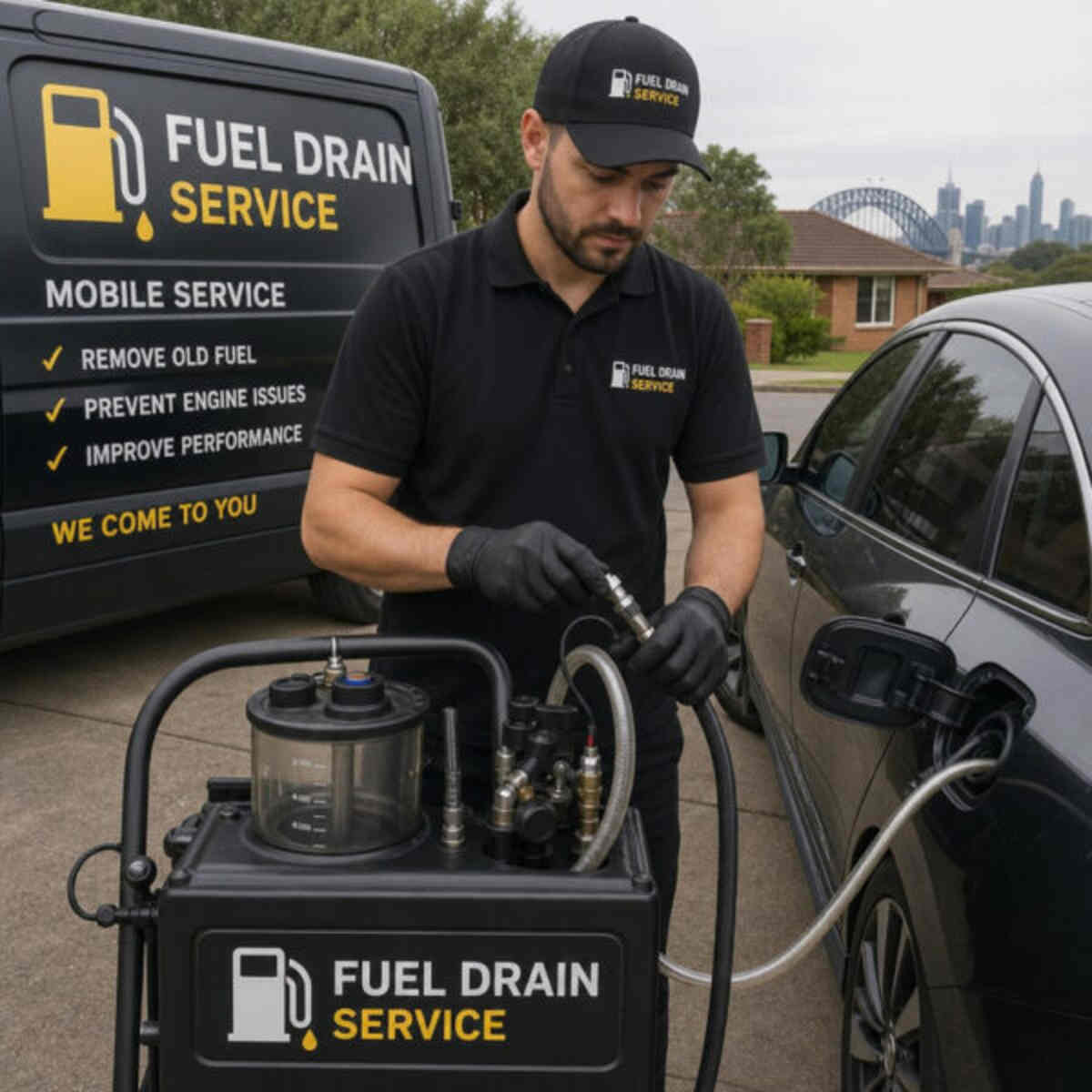
When the wrong fuel goes into your vehicle, the day can turn stressful very quickly. Maybe you realised at the pump. Maybe the engine spluttered a few minutes down the road. Or maybe you are standing in a Sydney service station wondering whether you should start the car, call a tow truck, or try to “dilute” the fuel and hope for the best. Uncover the best info about Fuel Drain Sydney.
Here is the simple answer: do not start the engine if you suspect a misfuel. If the vehicle is already running, switch it off when it is safe to do so. Then arrange a professional fuel drain service that can remove the contaminated fuel, flush the system where appropriate, and help you get moving again with less risk of expensive damage.
This page explains how a professional fuel drain works, when you may need a fuel tank drain, what affects pricing, how safety is handled, and what to expect when booking help in Sydney.
Need a Fuel Drain in Sydney? Start Here
A wrong-fuel incident can happen to anyone. It is especially common when drivers swap between petrol and diesel vehicles, use hire cars, share family vehicles, or fill up while tired, distracted, or in a hurry.
If you are searching for fuel drain sydney, you are probably trying to solve one of these problems:
- You put petrol into a diesel car.
- You put diesel into a petrol car.
- You added AdBlue, water, or another liquid into the fuel tank by mistake.
- You bought a vehicle and suspect old or contaminated fuel is in the tank.
- Your vehicle is running poorly after a recent refuel.
- You need fuel safely removed before repair work, transport, or storage.
- You operate a fleet and need a fast response to reduce downtime.
A professional fuel drain service is designed to remove the wrong or contaminated fuel safely and efficiently. Depending on the situation, the service may include draining the tank, flushing lines, checking for contamination, adding the correct fuel, and testing the vehicle before it is driven again.
The goal is not just to empty the tank. The goal is to protect the fuel system and help you make the right next step.
What Is a Fuel Drain Service?
A fuel drain service is a specialised roadside or workshop service that removes incorrect, contaminated, stale, or unwanted fuel from a vehicle, machine, boat, generator, or fuel storage system.
In a typical wrong-fuel scenario, a technician removes fuel from the tank using equipment designed for fuel handling. The fuel is stored in appropriate containers, and the system may be flushed to reduce contamination. Once the technician is satisfied that the risk has been reduced, the correct fuel can be added and the vehicle can be checked.
A fuel drain is often needed when the fuel in the tank could damage the vehicle or make it unsafe to drive. That includes cases where petrol has been added to diesel, diesel has been added to petrol, or foreign substances have entered the tank.
A proper fuel tank drain is different from simply siphoning fuel out with a hose. Modern vehicles can have anti-siphon valves, complex fuel pumps, sensitive injectors, high-pressure systems, and electronic components. Using the wrong equipment or method can create fire risk, environmental risk, or further mechanical damage.
Professional technicians are trained to manage these risks. They understand how to handle flammable liquids, how to reduce spillage, and how to choose a method that suits the vehicle and contamination level.
Why Wrong Fuel Is Such a Big Deal
Many drivers hope that a small amount of wrong fuel will be harmless. Sometimes, if the mistake is caught early and the vehicle has not been started, the solution can be relatively straightforward. But the risk increases quickly once the fuel moves from the tank into the fuel lines, pump, injectors, and engine.
The main issue is that petrol and diesel behave very differently.
Diesel acts as both a fuel and a lubricant for many diesel fuel system components. Petrol does not provide the same lubrication. When petrol enters a diesel system, it can reduce lubrication, increase friction, and create wear in pumps and injectors. Modern common-rail diesel systems can be especially sensitive.
Diesel in a petrol vehicle can create different problems. Petrol engines rely on fuel that vaporises and ignites in a particular way. Diesel is heavier and does not burn the same way in a petrol engine. It may cause smoke, rough running, misfires, poor acceleration, and potential damage if the vehicle continues to be driven.
Contaminated fuel can also cause issues. Water, dirt, stale fuel, or chemical contamination may clog filters, corrode components, reduce performance, or stop the engine altogether.
That is why a fast response matters. The sooner the contaminated fuel is removed, the better your chances of avoiding larger repair costs.
Common Situations That Need Fuel Drain Help
Fuel problems rarely happen at a convenient time. They happen at busy service stations, on work days, during school runs, before long drives, or when a vehicle is needed urgently.
Professional fuel drain support can help in several common situations.
Petrol in a Diesel Vehicle
This is one of the most common wrong-fuel problems. Diesel vehicles often have wider filler necks, and petrol nozzles can fit into many diesel tanks. The mistake is easy to make, especially if you drive more than one vehicle.
If petrol has been added to a diesel tank:
- Do not turn the ignition on if you can avoid it.
- Do not start the engine.
- If already driving, stop safely as soon as possible.
- Call for a fuel drain service.
If the vehicle has not been started, the technician may be able to drain the tank, flush the affected fuel, add clean diesel, and check operation. If the vehicle has been driven, additional checks may be required because the contaminated fuel may have reached sensitive components.
Diesel in a Petrol Vehicle
Diesel nozzles are often larger and may not fit easily into many petrol filler necks, but this mistake still happens. It can occur with older vehicles, machinery, fuel cans, motorcycles, boats, or when fuel is poured manually.
If diesel has entered a petrol tank, the vehicle may struggle to start or run roughly. It may produce smoke, misfire, or lose power. A fuel tank drain can remove the diesel-contaminated petrol and reduce the risk of ongoing issues.
AdBlue in the Fuel Tank
AdBlue is not a fuel. It belongs in a separate AdBlue tank in vehicles that require it. If AdBlue is poured into a diesel tank, the vehicle should not be started. AdBlue can crystallise and may damage fuel system components.
This is a situation where professional help is especially important. The system may need careful draining and cleaning, and the technician may advise further mechanical inspection depending on how far the contamination has travelled.
Water in the Fuel Tank
Water can enter a fuel tank through contaminated fuel, flood exposure, poor storage, condensation, damaged seals, or incorrect filling. Water in the fuel system can cause poor running, corrosion, blocked filters, and starting problems.
Signs may include rough idle, sudden stalling, hesitation, warning lights, or a vehicle that starts and then cuts out. A professional fuel drain can remove contaminated fuel and help determine whether filters or further repairs are needed.
Old or Stale Fuel
Fuel can deteriorate over time. Vehicles, boats, motorcycles, generators, and equipment that sit unused for long periods may develop fuel-related problems. Stale fuel can lose performance, produce varnish-like residue, and create starting or running issues.
A fuel drain may be useful before attempting to start equipment that has been sitting for months. It can also be helpful when preparing a stored vehicle for sale, service, transport, or regular use again.
Contaminated Fuel After Refuelling
Sometimes drivers suspect the issue began immediately after filling up. The vehicle may begin running poorly, lose power, stall, or trigger dashboard warnings. While not every post-refuelling issue is caused by bad fuel, contamination is one possible cause.
A technician can assess the fuel and decide whether draining is appropriate. In some cases, the next step may involve a mechanic, especially if filters, pumps, injectors, or sensors have been affected.
Fuel Removal for Repairs or Transport
Fuel may need to be removed before certain repairs, tank replacement, vehicle transport, storage, disposal, or modification work. In these cases, the fuel may not be “wrong” fuel, but it still needs to be handled safely.
A professional fuel tank drain can reduce fire risk and help prepare the vehicle or equipment for the next stage of work.
What to Do Immediately After Putting in the Wrong Fuel
The first few minutes matter. The action you take can influence how much contamination spreads through the system.
If you realise the mistake before starting the vehicle, you are in the best position.
Do this:
- Stop filling immediately.
- Do not start the engine.
- Do not turn the ignition on if possible.
- Put the vehicle in a safe position if you can do so without starting it.
- Let service station staff know if you are blocking a bowser.
- Call a fuel drain specialist.
If you have already started the vehicle:
- Pull over safely as soon as you can.
- Switch off the engine.
- Do not restart it to “test” whether it is okay.
- Note what fuel was added and roughly how much.
- Call for advice before driving further.
If you are unsure what happened, still pause. It is better to ask for guidance than risk pushing contaminated fuel deeper into the system.
Why You Should Not Drive “Just a Little Further”
Many drivers are tempted to keep going. They may think they can drive home, reach a mechanic, or burn through the wrong fuel. This can be risky.
The longer the engine runs, the more contaminated fuel may circulate. In diesel vehicles, petrol contamination may affect lubrication in the pump and injectors. In petrol vehicles, diesel contamination may cause misfiring, smoke, and poor combustion. Water or chemical contamination can cause its own set of problems.
Driving further may turn a straightforward fuel drain into a more complicated repair. It may also create safety issues if the vehicle stalls in traffic or loses power at the wrong moment.
A roadside fuel drain service exists because these situations need fast, practical attention where the vehicle is located. In many cases, arranging a drain at the service station or roadside is easier than towing the vehicle to a workshop.
How a Professional Fuel Drain Works
The exact process depends on the vehicle, the fuel type, the amount of contamination, and whether the engine has been started. However, a professional fuel drain in Sydney commonly follows a structured process.
Step 1: Initial Questions and Risk Check
When you call, the technician or support team will ask practical questions such as:
- What vehicle are you driving?
- What fuel should it take?
- What fuel was added by mistake?
- Approximately how much wrong fuel went in?
- Was the engine started?
- Was the vehicle driven?
- Where is the vehicle located?
- Is it in a safe place to work?
- Are there warning lights, smoke, stalling, or unusual noises?
These questions help the technician understand urgency, equipment requirements, and the level of risk.
Step 2: Safe Setup at the Location
Once on site, the technician will position equipment safely and assess the vehicle. Safety matters because fuel is flammable, harmful to the environment, and not something to handle casually in a public space.
The technician may need room around the vehicle, adequate ventilation, and a safe working area away from ignition sources. If the vehicle is at a busy service station, the technician may coordinate the setup so the job can be completed with minimal disruption.
Step 3: Fuel Removal
The contaminated fuel is removed from the tank using suitable equipment. The method can vary depending on the vehicle’s design. Some vehicles allow access through the filler neck, while others may require access through fuel lines, tank ports, or other safe service points.
This is where experience matters. Modern vehicles are not all built the same way. A careful approach reduces the risk of damaging fittings, pumps, seals, sensors, or interior components.
Step 4: Flushing Where Appropriate
If wrong fuel has reached the lines or filter, the technician may flush parts of the system to reduce contamination. The extent of flushing depends on whether the ignition was turned on, whether the engine was started, and how long the vehicle was driven.
Not every vehicle needs the same level of flushing. A car that has not been started may need a simpler drain than one that has been driven for several kilometres.
Step 5: Correct Fuel Added
After the contaminated fuel is removed, the correct fuel may be added. This allows the system to be primed and checked. In some cases, fuel filters may need inspection or replacement by a mechanic, depending on the contamination and vehicle type.
Step 6: Testing and Advice
The technician may start the vehicle, check for smooth operation, monitor for warning signs, and provide guidance. If the vehicle does not run correctly after the drain, further mechanical diagnosis may be needed.
A good service will not pretend that every wrong-fuel case is identical. The technician should explain what was done, what to watch for, and whether follow-up with a mechanic is recommended.
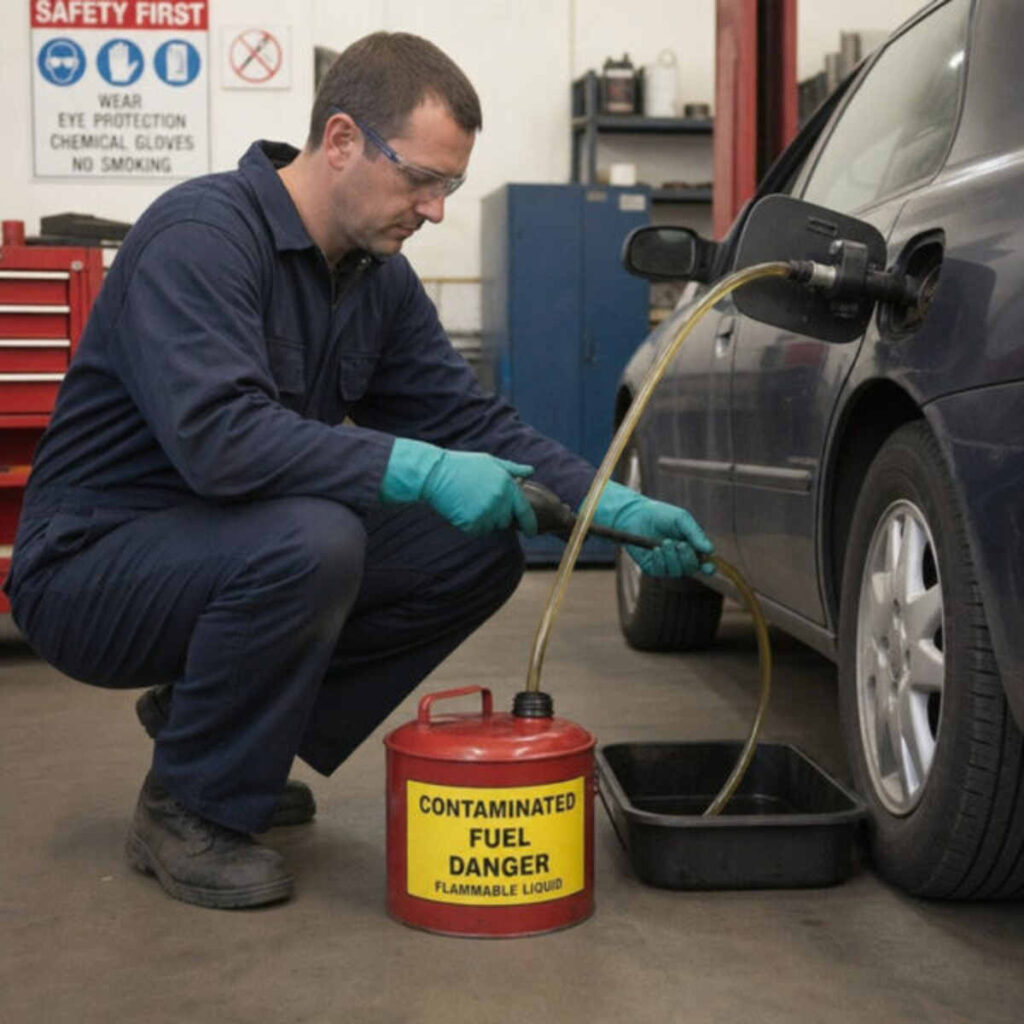
Mobile Fuel Drain Sydney Services
A mobile fuel drain sydney service is designed to come to the vehicle rather than making you arrange transport first. That can be especially helpful when the vehicle is at a petrol station, roadside, workplace, driveway, car park, or depot.
Mobile support can reduce downtime and may avoid the need for towing in many wrong-fuel situations. It can also be more convenient for fleet vehicles, tradespeople, delivery drivers, rideshare drivers, and families who need the vehicle back on the road quickly.
Common mobile fuel drain locations include:
- Service stations
- Shopping centre car parks
- Office car parks
- Residential driveways
- Roadside breakdown locations
- Fleet yards
- Construction sites
- Storage facilities
- Marinas and equipment yards, where suitable access is available
Because Sydney traffic and access conditions can vary, response times may depend on your exact location, time of day, technician availability, and whether the vehicle is safe to access. A reliable provider will give you a practical estimate rather than a vague promise.
Fuel Tank Drain for Cars, 4WDs, Vans, and Commercial Vehicles
Fuel drain work is not limited to one type of vehicle. The right provider may be able to assist with a broad range of vehicles and equipment, including:
- Passenger cars
- SUVs and 4WDs
- Utes
- Vans
- Light commercial vehicles
- Fleet vehicles
- Small trucks, where suitable
- Motorcycles, where suitable
- Boats and marine engines, where access is appropriate
- Generators and machinery
- Stored or unused vehicles
The process can differ between vehicle types. A modern diesel ute may need a different approach from a petrol hatchback, an older van, or a piece of machinery. That is why it helps to provide the make, model, year, fuel type, and location when requesting service.
If the vehicle has special access issues, aftermarket tanks, locked fuel caps, dual tanks, or a modified fuel system, mention that upfront. The more information you provide, the better prepared the technician can be.
Wrong Fuel in a Diesel Car: What You Need to Know
Putting petrol into a diesel car is one of the most stressful misfuelling situations because diesel fuel systems can be costly to repair. The risk depends on the amount of petrol added, the size of the tank, whether the vehicle was started, and how long it ran.
If the vehicle has not been started, do not start it. This can keep contamination mostly within the tank and may reduce the amount of flushing required.
If the vehicle has been started or driven, the technician will want to know how far it went and what happened. Did it stall? Did it run roughly? Did it make unusual noises? Did warning lights appear? These details matter.
In some cases, a fuel drain and flush may be enough to get the vehicle running again. In other cases, particularly where the vehicle was driven for a while or has symptoms after draining, mechanical inspection may be recommended.
The key point is simple: the earlier you stop, the better.
Wrong Fuel in a Petrol Car: What You Need to Know
Diesel in a petrol car can cause poor running because diesel does not ignite in the same way as petrol. The vehicle may be difficult to start, run roughly, smoke, or stall.
If you have not started the vehicle, leave it off and call for help. If you have driven it, stop safely and avoid restarting.
A fuel drain service can remove the diesel-contaminated petrol and replace it with the correct fuel. If the engine has run for some time, further checks may be needed to confirm that the system is operating properly.
While diesel in petrol is often discussed as less common than petrol in diesel, it should still be treated seriously. Continuing to drive can worsen symptoms and make the problem harder to resolve.
Fuel Contamination Beyond Wrong Fuel
Not every fuel drain job involves petrol and diesel mix-ups. Fuel can become unsuitable for several reasons.
Water Contamination
Water may settle at the bottom of the tank, interfere with combustion, corrode parts, and cause stalling or rough running. Diesel vehicles may have water sensors or filters designed to capture some contamination, but these systems have limits.
Dirt, Rust, and Sediment
Older tanks, poorly stored fuel, or contaminated fuel cans can introduce debris. This may clog filters and damage pumps or injectors. If sediment is present, draining may need to be paired with filter replacement or further cleaning.
Stale Fuel
Fuel that has been sitting for a long time may lose quality. This can affect stored cars, classic vehicles, motorbikes, boats, generators, and seasonal equipment. A drain and refill can be a sensible step before relying on the engine again.
Chemical Contamination
AdBlue, cleaning chemicals, oils, or unknown liquids in the fuel tank can create serious issues. Do not try to run the engine to “clear it out.” Get advice before starting.
Safety Comes First
Fuel is hazardous. It can ignite, release vapours, harm skin, damage surfaces, and contaminate soil or waterways. A professional fuel drain should be carried out with careful attention to safety and environmental responsibility.
Safety considerations may include:
- Keeping ignition sources away from the work area
- Using suitable fuel transfer equipment
- Avoiding spills during removal
- Storing drained fuel in appropriate containers
- Managing vapours in enclosed or semi-enclosed areas
- Working in a safe location away from traffic where possible
- Protecting drains, soil, and waterways from contamination
- Handling petrol, diesel, and contaminated mixtures responsibly
- Advising the customer on safe next steps
If your vehicle is stopped in an unsafe place, such as a live traffic lane, tunnel, narrow shoulder, or high-risk roadside area, emergency roadside assistance or towing may be required before a fuel drain can be performed. The priority is always personal safety.
Compliance and Responsible Fuel Disposal
A fuel drain service is not only about removing fuel from a tank. It also involves responsible handling of contaminated fuel.
Wrong-fuel mixtures are not usually suitable to be poured back into a vehicle or disposed of casually. Fuel must not be poured down drains, onto the ground, into bins, or into waterways. Disposal should be handled through appropriate waste pathways.
When choosing a provider, ask how they handle contaminated fuel. A responsible service should be able to explain, in plain language, how fuel is stored, transported, and managed after removal.
For businesses and fleets, this can be especially important. You may need confidence that fuel handling is managed safely and that your workplace is not exposed to unnecessary environmental or fire risk.
What Affects Fuel Drain Pricing?
Many people searching for a fuel drain in Sydney want to know the price straight away. That is understandable. A wrong-fuel incident is usually unexpected, and no one wants vague costs.
However, pricing can vary depending on several practical factors.
The Amount of Fuel in the Tank
A small amount of wrong fuel in a nearly empty tank can be simpler to manage than a full tank of contaminated fuel. The more fuel that needs to be removed, the more time, equipment capacity, and disposal handling may be involved.
Whether the Vehicle Was Started
If the engine was not started, the job may be more straightforward because contamination may still be mostly in the tank. If the vehicle was started or driven, fuel may have moved through the system, and extra flushing or checks may be needed.
Vehicle Type and Access
Some vehicles are easier to access than others. Anti-siphon devices, underbody protection, tank design, dual tanks, complex filler necks, and fuel pump layouts can affect how long the job takes.
Fuel Type and Contamination
Petrol in diesel, diesel in petrol, AdBlue contamination, water contamination, and unknown substances may require different approaches. Some contaminants are more serious and may require more careful handling.
Location and Callout Conditions
The cost may be affected by where the vehicle is located, how far the technician needs to travel, parking or access difficulty, after-hours timing, and whether urgent attendance is needed.
Additional Fuel or Parts
Some services may include a limited amount of correct fuel, while others may charge separately. Filter replacement, mechanical inspection, or workshop repairs may also be separate if needed.
Waste Handling
Responsible handling and disposal of contaminated fuel can form part of the overall cost. This is one reason why a very cheap quote may not always be the best value.
Asking for a Quote: What Information to Provide
To receive a more accurate quote, provide clear information when you call or enquire.
Helpful details include:
- Your exact location or nearest cross street
- Vehicle make, model, and year
- Correct fuel type for the vehicle
- Wrong fuel or contaminant added
- Approximate amount added
- Approximate amount already in the tank before filling
- Whether the ignition was turned on
- Whether the engine was started
- Whether the vehicle was driven
- Any symptoms, warning lights, smoke, or stalling
- Whether the vehicle is in a safe place to work
- Whether it is a private vehicle, commercial vehicle, fleet vehicle, boat, or equipment
You do not need perfect answers. Estimates are fine. But the more detail you can provide, the easier it is to plan the job and explain likely pricing.
Why Choose a Specialist Instead of DIY?
It can be tempting to solve the problem yourself, especially if you are handy or the vehicle is sitting at home. But fuel draining is not a normal DIY job.
DIY fuel removal can create risks such as:
- Fire or explosion from fuel vapours
- Fuel spills on driveways, roads, or soil
- Exposure to toxic fumes or skin irritants
- Damage to fuel pumps, lines, seals, or sensors
- Incomplete removal of contamination
- Incorrect disposal of fuel
- Starting the vehicle too soon
- Voiding insurance or warranty considerations in some situations
Modern vehicles are also more complex than many drivers realise. A quick siphon may remove some liquid, but it may not remove enough contaminated fuel from the tank, lines, or components. The vehicle may run briefly and then develop symptoms later.
A professional fuel drain service gives you a safer, cleaner, and more systematic option.
What If You Already Drove the Vehicle?
Do not panic, but do stop driving. Many wrong-fuel cases still have solutions after the vehicle has been started, but the risk level is higher.
If you drove the vehicle, be ready to explain:
- How far you drove
- How long the engine ran
- Whether it stalled
- Whether it restarted
- Whether there were warning lights
- Whether there was smoke from the exhaust
- Whether the engine sounded unusual
- Whether you noticed power loss or rough running
The technician may perform a drain and flush, but they may also advise that a mechanic inspect the vehicle if symptoms remain. This is not a scare tactic. It is simply realistic. Fuel system damage is not always visible during a roadside visit.
If the engine is making unusual noises, do not keep testing it. Repeated starts can make the situation worse.
What If You Only Added a Small Amount of Wrong Fuel?
Some drivers add a small amount of wrong fuel and wonder whether topping up with the correct fuel is enough. This depends on the vehicle, fuel type, amount, and whether the engine has been started.
The safest option is to ask for advice before starting or driving. Even a small amount of petrol in a diesel system can be risky for certain vehicles. The wrong choice could cost more than a fuel drain.
A technician can help assess the risk based on the ratio of wrong fuel to correct fuel. If a drain is recommended, it is usually because the potential cost of damage is higher than the cost of removing the contaminated fuel.
Emergency Fuel Drain Support
Wrong fuel often feels like an emergency, particularly if you are blocking a pump, travelling with children, using a work vehicle, or stuck away from home.
A responsive fuel drain provider should help you understand what to do while waiting. They may advise you to keep the vehicle switched off, move only if safe and possible without starting, notify staff if you are at a service station, and stay out of traffic.
If the situation involves a fuel spill, strong fumes, a collision, fire risk, or danger to people, emergency services may be required. A fuel drain technician is not a substitute for emergency response where there is immediate danger.
Local Sydney Service Considerations
Sydney presents its own practical challenges: traffic, tight service station layouts, underground car parks, busy roads, toll roads, restricted loading zones, and limited access in some residential areas.
When booking a fuel drain in Sydney, clear location details help. If you are in a large car park, mention the level, section, entry point, or nearest landmark. If you are at a service station, provide the brand, suburb, street, and bowser number if available. If you are on the roadside, provide the nearest cross street and direction of travel.
The easier it is for the technician to find you, the faster the job can begin.
For local service pages, people often search by suburb or area. A provider may assist across many parts of Sydney, but availability can vary by time and distance. If your location is outside the usual service area, the team can advise whether mobile support, referral, or towing is the best next step.
Fleet and Business Fuel Drain Services
Fuel mistakes can be costly for businesses. A single vehicle off the road can delay jobs, deliveries, bookings, or staff schedules. For fleets, a fuel drain service can help reduce downtime and provide a consistent process for drivers who make a mistake.
Business users may need support for:
- Utes and trade vehicles
- Vans and delivery vehicles
- Sales cars
- Company cars
- Rental or loan vehicles
- Light trucks
- Site equipment
- Generators
- Machinery
- Pool vehicles
A practical fleet process may include driver instructions, priority callouts where available, clear invoicing, and advice on what information drivers should collect after a misfuel.
If you manage a fleet, it is worth creating a simple internal rule: if wrong fuel is suspected, the driver should stop, avoid restarting, take a photo of the pump receipt if safe, record the location, and call the nominated support provider.
Service Station Fuel Drain Help
A common fuel drain scenario happens at the bowser. You finish filling, look at the receipt, and realise the fuel type is wrong. It is frustrating, but it is also one of the better times to catch the mistake because the engine may not have been started.
If this happens:
- Keep the vehicle switched off.
- Do not move it under engine power.
- Tell service station staff what happened.
- Ask whether the vehicle can remain where it is until help arrives.
- If it must be moved, ask whether it can be pushed safely.
- Call for a fuel drain service and explain that the vehicle has not been started.
Service station staff deal with these situations more often than you might think. Staying calm and communicating clearly usually makes the situation easier for everyone.
Driveway and Home Fuel Drains
Fuel problems do not only happen at service stations. You may fill from a jerry can at home, prepare equipment after storage, or discover contamination in a vehicle that has been sitting unused.
A driveway fuel tank drain may be useful for:
- Stored vehicles with old fuel
- Classic cars
- Motorcycles
- Lawn and garden equipment
- Boats stored at home, where accessible
- Generators
- Vehicles filled from the wrong fuel can
- Cars that will not start after refuelling
The working area should be safe, ventilated, and accessible. If the vehicle is in a basement garage or enclosed space, the technician may need to assess whether the drain can be performed safely on site.
Fuel Drain for Boats, Machinery, and Equipment
Fuel contamination can be a major issue for boats and machinery. Water contamination, stale fuel, and mixed fuel mistakes can create poor performance or complete failure when the equipment is needed most.
A fuel drain may assist with:
- Marine fuel tanks
- Small boats and trailer boats, where access is suitable
- Generators
- Pumps
- Construction equipment
- Agricultural or landscaping machinery
- Stored engines
- Seasonal equipment
Access is important. Some tanks are built into tight compartments or require specialist marine or mechanical work. If access is limited, the service provider may advise what is possible and whether a specialist mechanic is needed.
How Long Does a Fuel Drain Take?
The time required depends on the amount of fuel, the vehicle design, contamination level, and whether flushing is needed. A simple wrong-fuel drain caught before the engine is started may be quicker than a full tank drain on a complex vehicle that has been driven.
Factors that can affect the time on site include:
- Tank size and fuel level
- Vehicle access points
- Whether anti-siphon features are fitted
- Whether the wrong fuel entered the lines
- Whether the vehicle is in a safe location
- Whether the technician can park close to the vehicle
- Whether correct fuel needs to be added afterward
- Whether testing reveals additional issues
A reliable provider should give you a practical estimate based on your situation.
Will a Fuel Drain Fix the Problem Completely?
Sometimes, yes. If the wrong fuel is caught before the engine is started, a proper drain and refill may be enough to get the vehicle back on the road.
However, no responsible provider should guarantee that every vehicle will be perfectly fine after a drain. If the vehicle was driven with contaminated fuel, there may be damage or lingering contamination. Fuel filters may need replacement. Pumps or injectors may need inspection. Warning lights may need diagnosis.
A good fuel drain service helps reduce risk and restore the correct fuel supply. If further mechanical work is needed, the technician should explain that clearly.
Signs Your Vehicle May Have Fuel Contamination
Sometimes drivers do not realise wrong fuel or contamination is the cause until the vehicle starts behaving strangely.
Possible signs include:
- Rough idle
- Difficulty starting
- Stalling shortly after starting
- Loss of power
- Hesitation under acceleration
- Excessive exhaust smoke
- Engine warning light
- Fuel system warning light
- Unusual engine noise
- Misfiring
- Poor fuel economy
- Vehicle cutting out after refuelling
These symptoms can also be caused by other mechanical issues. If symptoms appear soon after refuelling, fuel contamination becomes a possibility. Stop driving and seek advice.
What Happens to the Drained Fuel?
Drained fuel may contain a mixture of petrol, diesel, water, AdBlue, dirt, or other contaminants. Because the mixture is unsafe or unsuitable for normal use, it should be handled responsibly.
A professional provider should store the fuel safely during the job and manage disposal or recycling through appropriate channels. Customers should not be left with open containers of contaminated fuel or told to pour it away.
If you are comparing quotes, ask whether waste handling is included. This can help you compare services more fairly.
Insurance, Warranty, and Repair Considerations
Wrong fuel incidents may raise questions about insurance, warranty, or roadside assistance coverage. Policies and warranty terms vary, so it is best to check your own documents or speak with your provider.
Some roadside assistance memberships may help with towing or callout support, but they may not cover all costs associated with fuel draining, disposal, replacement fuel, or mechanical repairs. Some insurance policies may respond to accidental misfuelling, while others may not.
If the vehicle is new, under warranty, leased, financed, or part of a company fleet, ask whether there are reporting requirements before further driving. Keep receipts, service notes, and records of what happened.
A fuel drain technician can provide practical information about the work performed, but they cannot usually decide insurance or warranty outcomes for you.
Choosing the Right Fuel Drain Provider in Sydney
Not all services are the same. When you are stressed and stuck, it is easy to choose the first number you find. But a few quick checks can help you make a better decision.
Look for a provider that offers:
- Clear communication before dispatch
- Experience with wrong-fuel situations
- Mobile service where possible
- Safe fuel handling equipment
- Transparent pricing factors
- Responsible waste handling
- Practical response estimates
- Advice based on whether the vehicle was started
- Support for your vehicle type
- Professional conduct at service stations and public locations
You should feel comfortable asking questions. A trustworthy provider will explain what they can do, what they cannot promise, and what may require mechanical follow-up.
What to Expect When You Call
A good phone call should be calm and practical. The person taking the call should help you avoid making the situation worse.
You can expect to discuss:
- Your location
- Your vehicle details
- Fuel type and wrong fuel type
- How much fuel was added
- Whether the engine has been started
- Whether the vehicle is safe to access
- Estimated arrival time
- Likely service process
- Pricing or quote range
- Payment options
- Any safety concerns
If you are in a high-pressure situation, such as blocking a busy pump, say so at the start. The team may help you decide whether the vehicle can be safely pushed or whether it should remain where it is until help arrives.
Simple Prevention Tips
Misfuelling is common, but a few small habits can reduce the risk.
Try these tips:
- Pause before lifting the nozzle.
- Read the label on the pump, not just the colour.
- Check the fuel cap or fuel door label.
- Avoid refuelling while distracted or on the phone.
- Be extra careful in hire cars, company cars, and borrowed vehicles.
- Label fuel cans clearly.
- Keep petrol and diesel cans separate.
- Brief staff or family members who share vehicles.
- Consider a reminder sticker near the fuel filler.
- For fleets, include fuel type in driver handover notes.
These habits take seconds but can save a lot of stress.
Why Fast Action Saves Money
The biggest cost in many wrong-fuel situations is not the drain itself. It is the damage that can happen if the vehicle is driven. Pumps, injectors, filters, catalytic converters, sensors, and other components can be expensive to inspect or replace.
Fast action helps because it can limit how far contamination spreads. If the wrong fuel stays in the tank, the job is usually more manageable. Once it circulates through the engine system, the risk increases.
That is why the best advice is also the simplest: stop, switch off, and call.
When Towing May Be Needed
A mobile fuel drain can be convenient, but it is not always the right or only option. Towing may be recommended if:
- The vehicle is in an unsafe location.
- There is a major fuel spill.
- The engine has suffered mechanical damage.
- The vehicle will not run after draining.
- The fuel system requires workshop repairs.
- Access to the tank is not safe or practical on site.
- The vehicle is in a restricted area where work cannot be performed.
A responsible provider should tell you if towing is the safer option. The goal is to solve the problem properly, not force a roadside drain where it is unsuitable.
Commercial, Fleet, and After-Hours Enquiries
If you operate vehicles for work, downtime matters. A misfuelled vehicle can delay staff, customers, and jobs. Having a plan in place helps reduce confusion.
For commercial enquiries, ask about:
- Mobile support availability
- Priority arrangements where available
- Multi-vehicle fleet procedures
- Invoicing options
- Service documentation
- After-hours assistance
- Support for depots or yards
- Preventive driver guidance
A fuel drain service can form part of a broader fleet incident process. Clear instructions help drivers act quickly and avoid worsening the problem.
Customer-Focused Service Matters
When someone calls for a fuel drain, they are usually embarrassed, stressed, or under time pressure. The right technician understands this. Misfuelling is a mistake, not a character flaw. It happens to careful people every day.
Good service should feel calm and respectful. You should not be made to feel foolish. You should receive clear advice, realistic expectations, and practical next steps.
A customer-focused approach includes:
- Speaking in plain English
- Explaining the risks without scare tactics
- Being upfront about likely costs
- Keeping you updated on arrival time
- Working safely and neatly
- Treating your vehicle with care
- Advising when a mechanic is needed
- Helping you understand what to do next
That is the difference between simply draining fuel and genuinely helping someone out of a difficult moment.
Ready to Book a Fuel Drain Service?
If you have put the wrong fuel in your vehicle or suspect contamination, the safest move is to stop driving and arrange professional help.
Before you call, gather the basics if you can:
- Where you are
- What vehicle you have
- What fuel it should take
- What fuel went in
- How much was added
- Whether the engine was started
- Any symptoms you noticed
Then get in touch for clear advice and a practical quote. If the vehicle is safe to access, a mobile fuel drain service may be able to assist at your location.
Need help now? Contact a local fuel drain specialist in Sydney and explain what happened before starting or driving the vehicle again.
Frequently Asked Questions
What should I do if I put the wrong fuel in my car?
Stop filling, keep the engine off, and do not turn the ignition on if possible. If the vehicle is already running, stop safely and switch it off. Then call a professional fuel drain service for advice. The less the vehicle runs, the lower the chance of contamination spreading through the system.
Can I start the car after putting in the wrong fuel?
It is best not to start the car. Starting the engine can draw the wrong fuel from the tank into the fuel lines, the pump, the injectors, and the engine. If you have not started it yet, leave it off and arrange a fuel tank drain.
Is petrol in a diesel car worse than diesel in a petrol car?
Both can cause problems, but petrol in a diesel vehicle can be especially concerning because diesel fuel systems often rely on diesel for lubrication. Petrol can reduce that lubrication and increase wear. Diesel in a petrol vehicle can also cause rough running, smoke, misfires, and stalling. In both cases, stop driving and get advice.
How much does a fuel drain in Sydney cost?
The cost depends on the vehicle, location, fuel amount, contamination type, whether the engine was started, whether flushing is required, and whether replacement fuel or waste handling is included. For an accurate quote, provide your vehicle details, location, fuel type, and the details of what happened.
Can you drain a full fuel tank?
A professional service can often drain a full tank, but the job may take longer and require adequate storage capacity for the fuel removed. Let the provider know roughly how much fuel is in the tank when you call.
What if I drove after putting in the wrong fuel?
Stop driving as soon as it is safe. Do not restart the vehicle. A technician may still be able to drain and flush the system, but further mechanical checks may be needed if the vehicle ran poorly, stalled, smoked, or displayed warning lights.
Will a fuel drain damage my car?
A professional fuel drain is intended to reduce risk, not create damage. Technicians use methods suited to fuel removal and vehicle access. However, if the vehicle has already been driven with contaminated fuel, existing damage may be present before the drain begins.
Can I drain the fuel myself?
DIY fuel draining is not recommended. Fuel is flammable, harmful, and difficult to dispose of responsibly. Modern vehicles can also be complex, with anti-siphon systems, electric pumps, sensors, and delicate components. A professional service is usually safer and more effective.
What happens to the contaminated fuel?
Contaminated fuel should be collected, stored, transported, and disposed of responsibly. It should not be poured down drains, tipped onto the ground, placed in household bins, or reused casually. Ask your provider how waste fuel is handled.
Do I need a mechanic after a fuel drain?
Not always. If the vehicle was not started, a fuel drain and refill may be enough. If the vehicle was driven, symptoms appeared, or contamination was severe, a mechanic may need to inspect filters, pumps, injectors, sensors, or other components.
Can a fuel drain service come to a petrol station?
Yes, mobile fuel drain services often attend service stations, provided the location is safe and accessible. If you are blocking a pump, let service station staff know and avoid starting the vehicle. The car may be pushed only if it is safe to do so.
How long does a fuel drain take?
Timing depends on fuel volume, vehicle design, access, contamination level, and whether flushing is needed. A simple case caught early may be quicker, while a full tank or a vehicle that has been driven may take longer.
Can you remove water from a fuel tank?
In many cases, yes. A fuel drain can remove contaminated fuel containing water. Depending on the severity, filters may also need replacement and further diagnosis may be required if the vehicle has been run with water in the system.
What if AdBlue went into the diesel tank?
Do not start the vehicle. AdBlue in the fuel tank can cause serious contamination and may damage components. Call for professional advice immediately. A careful drain and cleaning process may be required, and further mechanical inspection may be recommended.
Do you service all of Sydney?
A local provider may cover many Sydney areas, but availability can depend on your location, time, access, and technician schedule. Provide your exact location when enquiring so the team can confirm whether mobile support is available.
Can wrong fuel affect my insurance or warranty?
It may, depending on your policy, warranty terms, lease agreement, or fleet rules. Keep records of what happened and the work performed. Contact your insurer, warranty provider, leasing company, or fleet manager if you are unsure.
What information should I give when booking?
Provide your location, vehicle make and model, correct fuel type, wrong fuel type, approximate quantity, whether the engine was started, whether you drove, and any symptoms. This helps the provider quote accurately and prepare the right equipment.
Is fuel draining safe in an underground car park?
It depends on ventilation, access, parking rules, and safety conditions. Fuel vapours can be hazardous in enclosed spaces. The technician may need to assess the location and recommend moving or towing the vehicle if on-site work is unsafe.
Can you help with old fuel in a stored car?
A fuel drain may be suitable for a stored vehicle with stale fuel, especially before attempting to start it after a long period. Depending on the vehicle and condition, further servicing may also be recommended.
What is the best thing to remember after misfuelling?
Do not start the vehicle. If it is already running, stop safely and switch it off. Call a professional fuel drain service and explain exactly what happened. Quick, calm action gives you the best chance of avoiding bigger problems.
Get Calm, Practical Help for Fuel Problems in Sydney
Wrong fuel is frustrating, but it does not have to ruin your day. With the right response, many situations can be managed safely and efficiently.
If you need a fuel drain service, a fuel tank drain, or local support after searching for fuel drain sydney, the next step is simple: stop driving, keep the vehicle switched off, and speak with a professional who can guide you through the safest option.
Call or enquire now for advice, a quote, and mobile assistance where available.