


That new $70 blockbuster, maybe the latest Call of Duty or a massive world like Baldur’s Gate 3, is all your friends are talking about. You want in on the action, but your wallet is giving you the side-eye. It’s incredibly tempting to search for a “free” version online, and millions do. Before you click that download link, it’s crucial to understand what’s really happening behind the scenes of video game piracy. To know more, check out serunikabinetmerahputih.org
The term “cracked” sounds simple, as if a game has just been unlocked. In reality, a cracked game is a program that has been fundamentally altered by an anonymous source. Think of it less like picking a lock and more like accepting a home-cooked meal from a stranger; you have no idea what ingredients they added or why they’re giving it away for free. You are trusting them completely with access to your computer.
While most people worry about a simple virus, the risks hidden inside cracked games are often more sinister. According to security researchers, many contain spyware designed to steal bank passwords, ransomware that holds personal photos hostage, or software that quietly uses your PC to power cryptocurrency scams, slowing your system to a crawl. The “free” download suddenly has a very high price. This guide will break down the real dangers in plain English and provide a roadmap of legitimate ways to save money on games and build an amazing library, legally and safely.
What Exactly Is a “Cracked” Game and Why Is It Risky?
When you buy a game from a legitimate store like Steam, you’re also getting a digital key that works with the game’s built-in Digital Rights Management (DRM). This is essentially a digital lock designed to verify that you’re a real owner, letting you play without issue.
A “cracked” game is one where anonymous hackers have broken that digital lock. They reverse-engineer the game’s code and create a separate piece of software—the “crack”—that bypasses the DRM check. In doing so, they fundamentally alter the game’s original files. You aren’t just getting the game for free; you’re running a modified program that a stranger on the internet has tinkered with, and you have no way of knowing what else they added.
You might see terms like “scene release” and assume they’re from a trusted source. In reality, the “scene” is just a collection of competing piracy groups. While they might have a reputation among other pirates, their goal is to beat rival groups, not to protect your computer. A scene release is still a cracked game from an unverified source, creating the perfect opportunity for hackers to hide malware inside.
The Obvious Danger: How Malware Infects Your PC Through Cracked Games
The immediate risk comes from malware—software intentionally designed to harm your computer or steal your data. When hackers crack a game, they don’t do it out of kindness. Bundling malware into the download is their payday. You wanted a free game; they want access to your PC.
This malicious code is often hidden within the game’s installer or the crack file itself. Think of it like a Trojan Horse: you’re willingly opening the gates for what looks like a gift, but you have no idea what’s hidden inside. Once you run the installer, the malware unpacks itself quietly in the background. You’ve just given it permission to take root in your system.
Sometimes, the infection is obvious. Be on the lookout for these classic warning signs that your computer is compromised:
- Your PC suddenly starts running incredibly slow.
- You experience frequent program crashes or the “blue screen of death.”
- Unwanted pop-up ads appear on your desktop or in your browser.
- Your internet browser’s homepage or search engine changes on its own.
But not all malware is this noisy. The most dangerous threats are the ones you can’t see, working silently to steal your most valuable information.
The Silent Thieves: How Spyware Steals Your Gaming and Bank Logins
While some malware slows your PC to a crawl, the more sinister threats are designed to be completely invisible. This is the world of spyware, malicious software whose only job is to hide on your system and secretly gather your personal information. It doesn’t announce itself with pop-ups or crashes; instead, it works silently in the background, turning your own computer into a spy that reports directly back to a criminal.
One of the most common types of spyware bundled with cracked games is a keylogger. A keylogger is a program that records every single key you press. When you type in your Steam password, it records it. When you log into your online banking or your Discord account, it records that, too. The hacker who hid the keylogger in your “free” game now has the keys to unlock your entire digital life.
With that information, they can hijack your gaming accounts to sell valuable items like rare skins, read your private messages, or even attempt to access your financial accounts. Losing an account is devastating, but some malware doesn’t just want to steal your data—it wants to hold it hostage.
PC Hostage: The Nightmare Scenario of a Ransomware Attack
That nightmare has a name: ransomware. It’s a particularly vicious type of malware often hidden inside pirated software. Unlike spyware that tries to stay hidden, ransomware announces itself loudly. Once activated, it doesn’t steal your files—it encrypts them, scrambling them into unreadable code. Your family photos, school assignments, and game saves are all still on your computer, but they’re locked in a digital safe, and the hacker is the only one with the key.
Suddenly, a message appears on your screen demanding a payment, often for hundreds or thousands of dollars, in exchange for the decryption key. Because the encryption used is so powerful, there is no way for you or even a tech expert to break it. You are completely at the mercy of the criminal who deployed the ransomware.
Paying the ransom is a desperate gamble. You are negotiating with a criminal who has already proven they are untrustworthy. Many people who pay never receive a working key, while others are targeted for even more money. They know you’re willing to pay.
The Legal Consequences: ISP Warnings and Copyright Law
Downloading cracked games doesn’t just pose a software risk; it carries real-world legal consequences. Your Internet Service Provider (ISP)—companies like Comcast, Verizon, or AT&T—can easily see when your connection is used to download copyrighted material from an unauthorized source, sending a digital red flag up on their network.
When a game publisher detects their game being pirated, they often send a formal complaint to the ISP. Your ISP is then legally obligated to forward this complaint to you. This is the infamous ISP warning letter or DMCA notice, informing you that your account has been flagged for copyright infringement. One letter might not seem like a big deal, but these warnings are recorded. After a few notices, your ISP has the right to “throttle” your connection, drastically slowing your internet, or even terminate your account entirely.
Beyond ISP penalties, the act itself is illegal. It falls under a legal concept called copyright infringement. When you legally buy a game, you’re buying a license to play it. A cracked game is one being used without that permission. While massive lawsuits against single downloaders are uncommon, they are not impossible. Game companies have the full legal right to seek damages, which can result in fines of thousands of dollars, especially for individuals who “seed” or upload files through torrents.
“My Antivirus Will Protect Me, Right?” Why That’s a Dangerous Gamble
It’s a logical thought: “I have a good antivirus, so what’s the worry?” The problem is that most antivirus software works by looking for the digital fingerprints of known, cataloged malware. However, malicious code in cracked games is often new or modified to be unrecognizable. Your antivirus is like a bouncer with a list of known troublemakers; it can’t stop someone whose name isn’t on the list.
You’ll often see a giant, blinking warning on download sites: “You must disable your antivirus to install! It’s just a false positive!” This is the biggest red flag imaginable. They are literally telling you to turn off your only line of defense. Trusting that advice is like letting a stranger convince you not to check a “free” meal for poison because the test might be “too sensitive.”
While a VPN (Virtual Private Network) is a great privacy tool for hiding your IP address from your ISP, it does nothing to protect you from a malicious file. It cannot scan the files themselves. Think of it as a cloaking device for your car; it might hide you from sight, but it won’t stop a bomb that’s already been placed inside.
The Smart Gamer’s Playbook: Never Pay Full Price on Steam Again
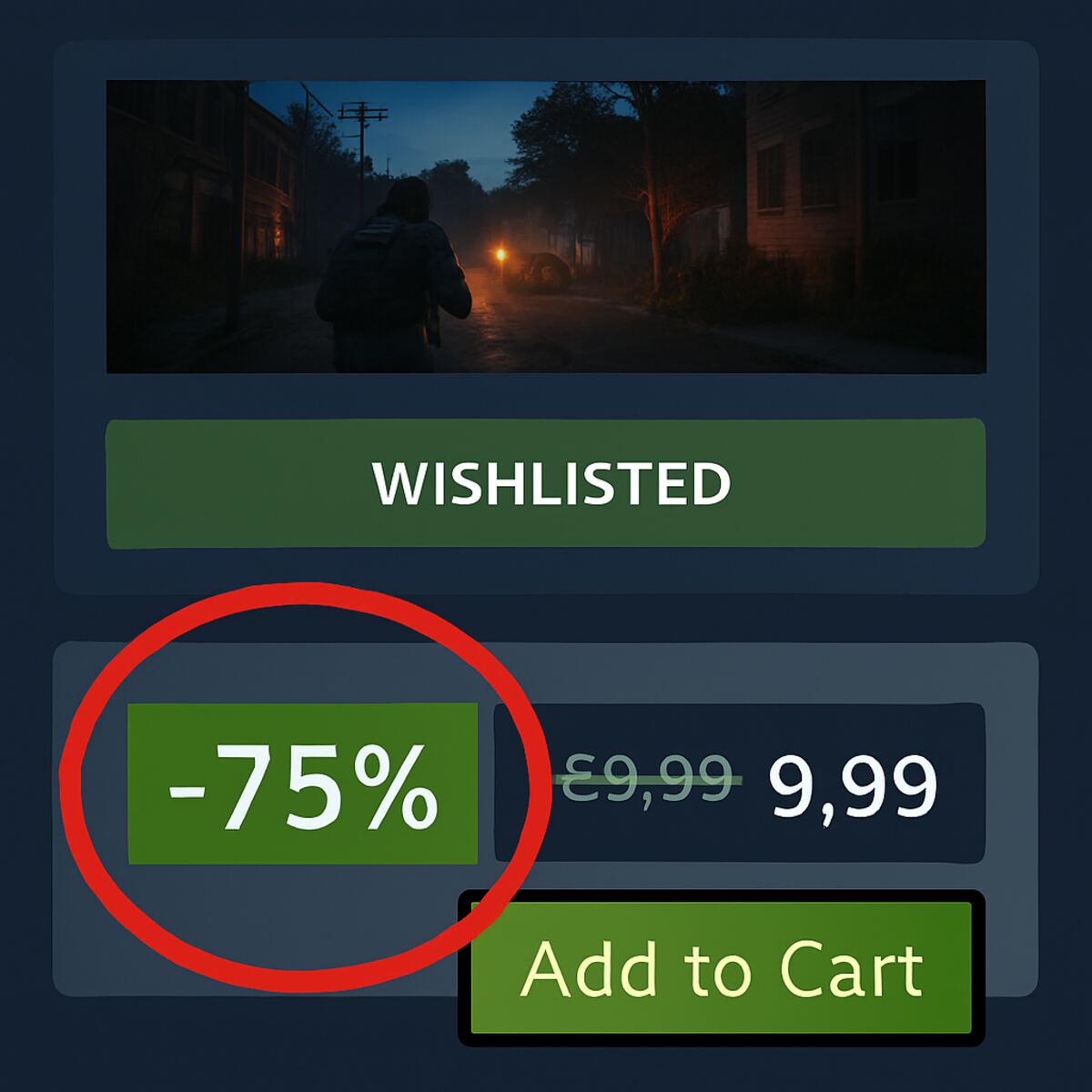
Getting great games for less doesn’t require risky downloads; it just requires a smart strategy, and the best place to start is right inside Steam. Every game page has an “Add to your Wishlist” button, which is your personal deal-hunting assistant. The moment a game on your list gets a price cut, Steam sends an email directly to your inbox.
Beyond waiting for a single notification, you can plan your purchases around the Steam sales calendar. Valve runs four massive, store-wide sales every year: Spring, Summer, Autumn, and Winter. By patiently building your Wishlist, you can grab multiple titles for a fraction of their original cost when these big sales hit.
Smart shopping doesn’t stop at Steam’s storefront, either. You can often find even better deals on sites known as official key resellers. These are legitimate online stores with agreements to sell official Steam keys. Think of them as the Best Buys of the digital game world, offering the same product through a different, authorized channel.
Beyond Steam: Your Guide to Amazing Deals on Humble Bundle and Fanatical
If Steam sales are a great deal, then game bundles are like hitting the jackpot. Several legitimate sites specialize in selling collections of games, called bundles, for a single, low price. The most famous model is “pay-what-you-want,” where you can often pay as little as one dollar to get a handful of great games. As you pay more—say, the average price or a higher tier like $15—you unlock even more titles.
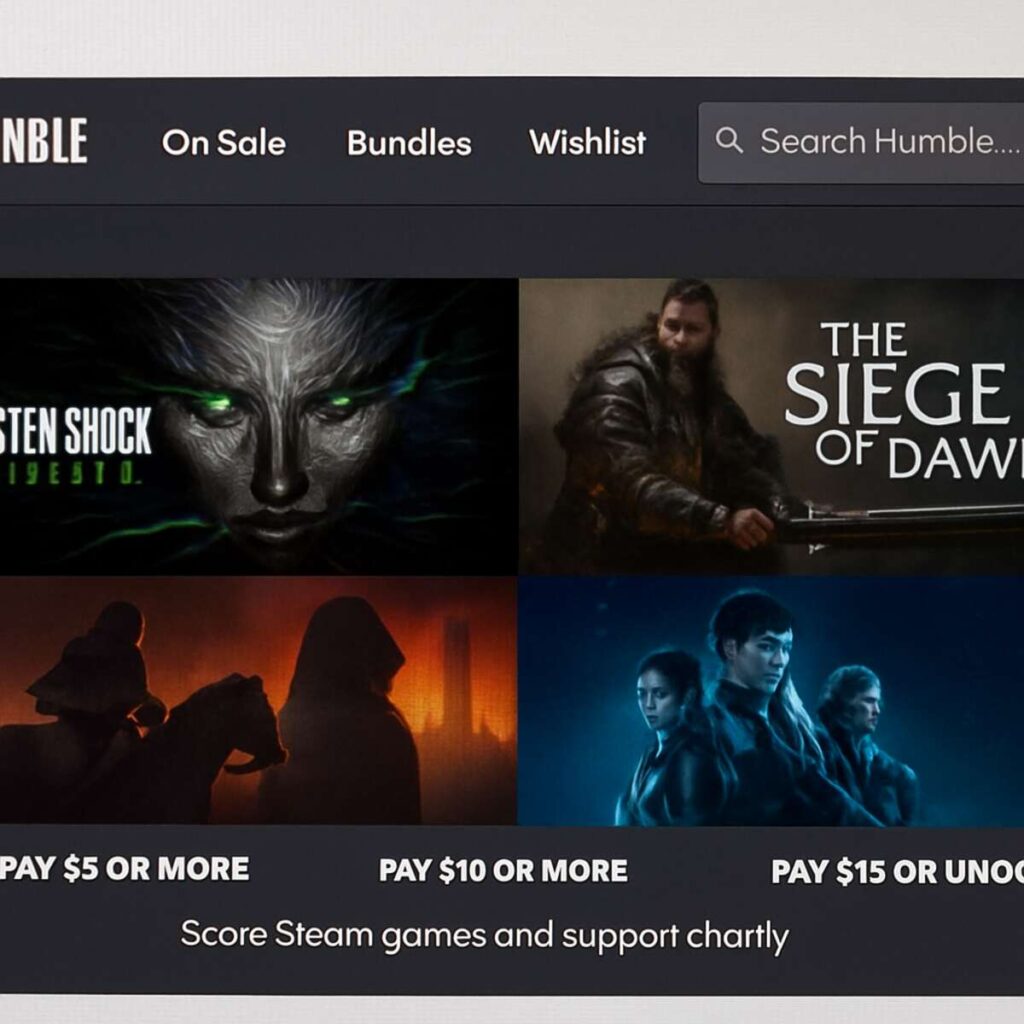
Humble Bundle is the pioneer of this model. A portion of every purchase goes to charity, so you can decide how your money is split between the developers, a charity, and Humble. You’re not just getting cheap games legally; you’re also supporting good causes.
Several other trusted sites offer amazing value. Keeping an eye on these storefronts ensures you’ll never miss out on a bargain.
Top Sites for Bundles & Deals:
- Humble Bundle: Best for pay-what-you-want bundles that support charity.
- Fanatical: Known for its “build-your-own” bundles and daily flash deals.
- GOG: A popular store for DRM-free classics and new releases.
The “Netflix for Games”: Is a PC Game Pass Subscription Worth It?
Services like PC Game Pass are essentially Netflix or Spotify for gaming. For a flat monthly fee, you get unlimited access to a massive, rotating library of hundreds of games. You can download and play any title in the collection as much as you want, as long as your subscription is active.
The real game-changer is getting brand-new blockbuster titles on the day they are released. Imagine a new $70 game launching, and instead of buying it, you can just download and play it instantly because it’s included in your subscription. Major releases from Microsoft’s own studios, like the Forza racing series or future Elder Scrolls titles, are guaranteed to be there on day one.
So, is it worth it? The math is simple. If you typically buy just two new, full-priced games a year that appear on the service, the subscription has already paid for itself. For anyone who wants to play lots of different games without the risk of pirating, a subscription is an amazing way to get cheap PC games legally.
Go DRM-Free: Why GOG.com Is a Gamer’s Best Friend
The desire to truly own your games leads to DRM-free gaming. DRM (Digital Rights Management) is the digital lock requiring you to prove ownership. A DRM-free game has no lock. A storefront called GOG.com (Good Old Games) has built its entire reputation on this idea, making it one of the best Steam alternatives for PC games for players who value ownership.
The difference in the GOG vs Steam DRM policy is profound. On Steam, you buy a license to play a game through their service. With GOG, you buy the actual game installer files. You can download them, copy them to a backup drive, and install them on any of your PCs, anytime, with or without an internet connection. It’s the digital equivalent of buying a physical copy.
This model gives you the freedom of a cracked game without the immense security risks. You get a clean, official copy that you can back up and keep forever, ensuring your library is truly yours while supporting the developers for their work.
Build a Library for Free (Legally!): Epic Games and F2P Titles
Getting great games for free isn’t a fantasy—it’s a weekly event. The Epic Games Store gives away at least one full PC game every week, no strings attached. These are often popular indie hits or even AAA titles that you claim once and own forever. All you need is a free account.
Beyond giveaways, a huge portion of the gaming world is Free-to-Play (F2P). An F2P game is officially released by its developer to be downloaded and played at no cost. The company makes money when players choose to buy optional items. The key difference between free-to-play games vs cracked games is security and support; F2P titles are legitimate, safe, and constantly updated.
Many of the world’s most-played titles operate on this model, providing complete experiences for free. Before you ever consider a risky download, check out these top-tier games:
- Top-Tier Free-to-Play Games to Try:
- Warframe
- Path of Exile
- Apex Legends
- Destiny 2
- The Sims 4
Smart Gaming Is Safe Gaming: Your Action Plan for a Better Library
The search for a free game once seemed like a harmless shortcut. But the “price” of a cracked game isn’t zero. It’s paid with risks to your personal files, your computer’s performance, and your peace of mind. That single download link is a gamble you’re now fully equipped to avoid.
Instead of taking that gamble, you have a playbook for building an incredible game library on a budget. You can master the Steam Wishlist, explore high-value bundles, leverage subscription services like PC Game Pass, and grab completely free titles from major storefronts. Each is a powerful tool waiting for you to use.
This approach does more than protect you. Finding great PC game deals is the practical answer to why you should support game developers; your smart purchase helps fund the next great title. You get to play securely while ensuring the creators you love can keep making the games you want to play. The goal isn’t just to avoid risks, but to master the system by practicing safe gaming habits. Your reward isn’t one questionable download—it’s the confidence and skill to build a massive, legitimate game library, safely and affordably.