


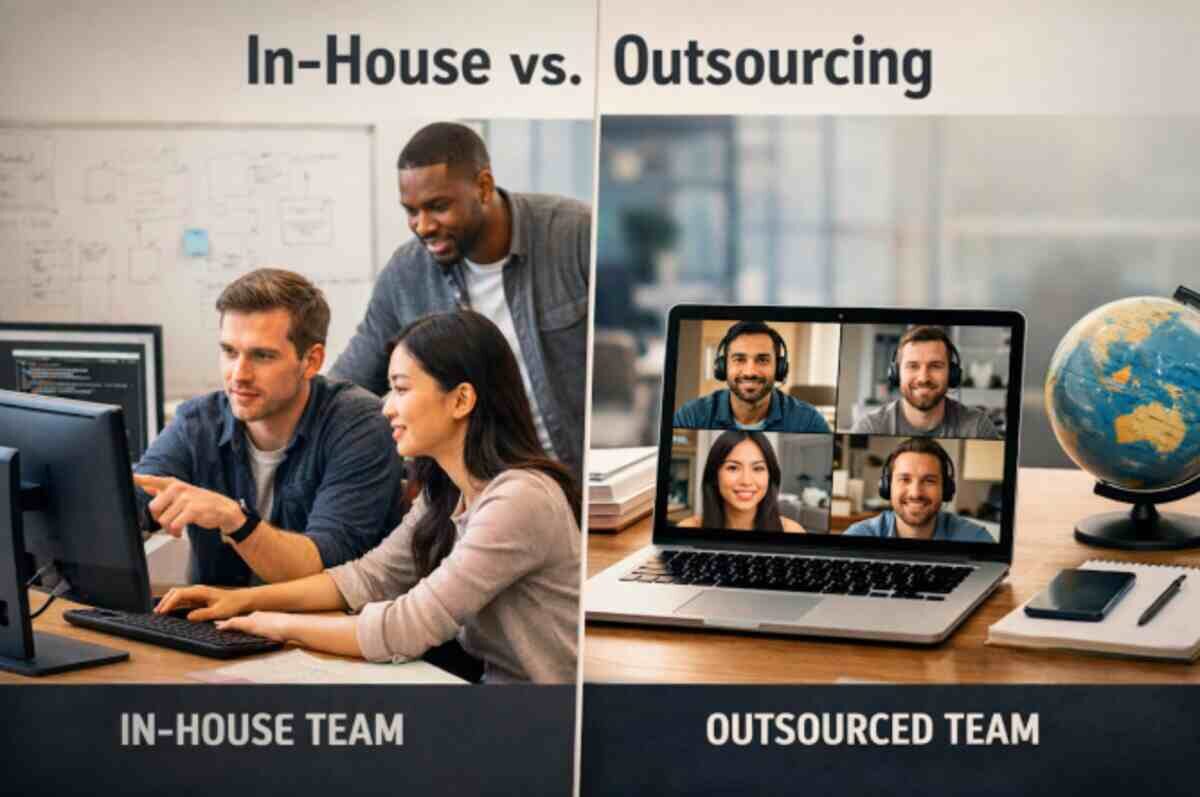
Building AI-powered products isn’t a niche thing anymore. It’s everywhere—whether you’re streamlining internal operations or creating something entirely new for customers. But when it comes down to the actual build, there’s one big question: Should you hire in-house developers or outsource?
There’s no one-size-fits-all answer. It depends on your goals, budget, timelines, and how much control you want over the process. This article walks you through the pros and cons of both routes so you can make the right call for your business.
Let’s break it down.
What Do AI Developers Actually Do?
Before we jump into the hiring side, let’s get clear on what these developers are usually responsible for.
They’re the ones working on things like:
- Training machine learning models
- Working with large datasets
- Writing code for intelligent systems
- Integrating AI into your apps or platforms
- Constantly tweaking things so your models don’t go stale
That’s the technical part. But a good AI developer also needs to understand your business. They’re not just building something cool—they’re solving a problem.
And trust me, finding the right person or team isn’t just about scanning resumes. There’s way more to it than that.
The In-House Approach
Hiring in-house means you’re bringing AI developers directly onto your payroll. They’re part of your team, fully invested in your company’s vision and culture.
Pros of Going In-House
- Full Control: You get to manage everything from daily tasks to long-term roadmaps. If something needs changing, your team is right there.
- Deep Product Knowledge: In-house teams live and breathe your product. Over time, they develop a deep understanding that outsiders might miss.
- Real-Time Collaboration: Meetings, quick fixes, impromptu brainstorms—they’re all easier when your team sits under the same virtual or physical roof.
Cons of Going In-House
- It’s Expensive: Salaries, benefits, training, equipment—it adds up. Especially if you’re trying to hire ai developers in competitive markets like the US.
- Hiring Takes Time: Good developers are hard to find. And even harder to keep. You might spend months recruiting, only to start over if they leave.
- Limited Skill Variety: You’ll likely hire a few specialists, not an entire squad. That means you might miss out on a wider range of skills that agencies or outsourced teams bring.
The Outsourcing Route
Outsourcing means you’re handing the work to an external team—could be a local agency or a remote crew halfway across the globe.
Pros of Outsourcing
- Cost Savings: Outsourcing can save serious money. You skip the overhead of full-time hires and can often tap into affordable global talent.
- Speed: Need something built fast? Many outsourcing firms already have full teams in place. No hiring delays.
- Broad Skill Sets: Most outsourcing firms work on multiple projects. That means their developers have hands-on experience across various tools, platforms, and industries.
- Flexibility: You scale up or down based on your current needs. No long-term commitments.
Cons of Outsourcing
- Communication Can Be Tricky: Different time zones, work styles, or even language barriers can slow things down or lead to misunderstandings.
- Less Product Context: An outsourced team won’t know your business like your own employees do. That gap can impact long-term decisions.
- Quality Varies: Not all agencies are created equal. If you go with the lowest bid, you might end up spending more fixing problems later.
So, Which One Should You Pick?
There’s no perfect answer. It really depends on what you need and where your company’s at.
Here are a few scenarios to think about:
Go In-House If…
- You’re building an AI-focused product long-term
- You have the budget for top talent
- You want full control and deep collaboration
- You already have some technical leadership in place
Go Outsourced If…
- You need to move fast
- You have a short-term or project-based goal
- Your budget’s tight but you still want access to skilled developers
- You’re testing the waters with AI but not ready to commit long-term
Don’t Forget the Hiring Tools
Whether you’re hiring in-house or outsourcing, you still need to make sure you’re getting the right people. That’s where tools like an AI Interview Tool can really help.
These tools can:
- Automatically screen candidates
- Test their real-world skills
- Cut down on bias
- Save you hours of manual work
Basically, they make hiring smoother and smarter—especially when you’re trying to hire AI developers with very specific skill sets.
AI and Automation Are Changing Everything
The way businesses operate today is nothing like five years ago. AI and automation have taken over tasks that used to take entire teams. But that doesn’t mean humans are out of the picture.
You still need smart people to build, monitor, and refine these systems. The tools can do a lot—but they need guidance. That’s why finding the right AI developers matters.
Whether you’re building a chatbot, automating internal processes, or launching a full-scale AI product, your developers are going to be a huge part of the journey.
If you’re already exploring AI and automation, chances are you’ve felt the pressure to find talent fast. Just remember: hiring right is more important than hiring fast.
Wrapping It Up: What Makes Sense for You?
Think about your company’s size, goals, and how quickly you want to move.
If you’re building a long-term, core product, hiring in-house might be the better bet. You’ll have people who are all-in and invested in your mission.
If you’re testing ideas, strapped for budget, or need to build quickly, outsourcing is a smart move. You’ll get access to experienced developers without the heavy commitment.
And hey, there’s no rule saying you have to pick just one. Many companies start with outsourcing and later bring things in-house once they have a clearer direction.
Whatever you decide, just make sure you’re looking beyond resumes. Use smart screening tools, talk to candidates, and make sure they understand your business—not just the code.
Need to hire ai developers? Start by knowing exactly what you’re building. That makes everything else easier.