


The Rise of Automated Trading Apps
We’ve all been there: you see a stock price dip, you want to buy some shares, but you’re stuck in a morning meeting. By the time you finally check your phone, the perfect window has closed and the price has bounced back up. Staring at stock charts all day creates a heavy mental toll known as “screen fatigue,” turning what should be a calculated financial move into a stressful waiting game.
Enter the modern era of automated trading apps, which were built to be the “you” that never has to sit in a meeting. Instead of treating investing as a manual, demanding chore, you can think of these tools as a highly dependable digital personal assistant. You give them a clear set of instructions, and they watch the market for you, ready to act exactly when your conditions are met.
According to standard financial psychology, removing human emotion from the equation is one of the best ways to improve investing consistency. When you use these modern trading platforms, you shift from reacting defensively to sudden price drops to being proactively prepared for them. The software executes your plan without hesitation, panic, or the temptation to second-guess a solid strategy.
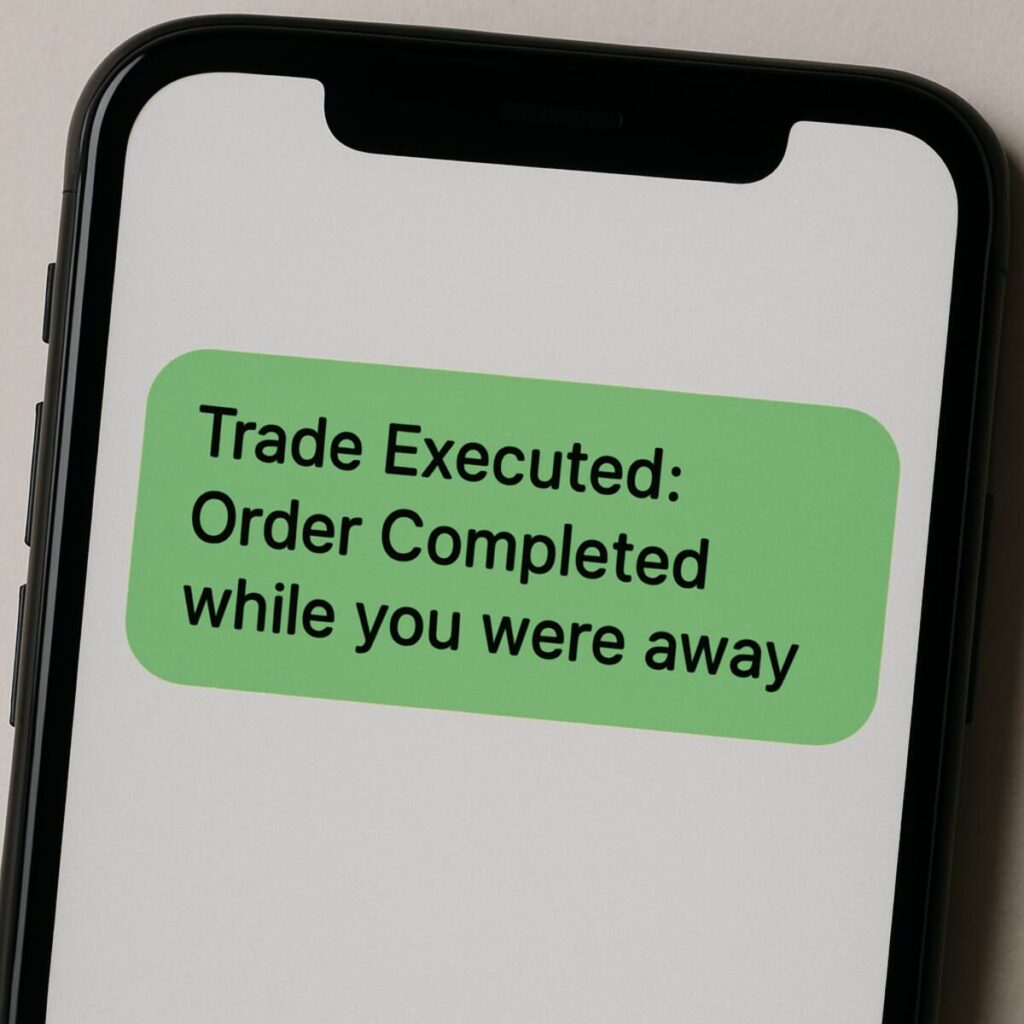
Imagine a situation where a stock you like suddenly drops at two in the afternoon while you are driving. Because you previously told your app to buy if the price hits a certain number—using simple “If/Then” logic—the software acts as your safety net and completes the digital handshake instantly. You get the shares at the exact price you wanted, completely stress-free.
Ultimately, you remain the pilot, while the software simply functions as your trusty autopilot. By learning how to set these basic rules, you reclaim your time and energy from the relentless stock market clock. The real secret to this technology is not about getting rich overnight, but about making your financial life significantly easier to manage.
From Manual to Automatic: The Cruise Control of Finance
Manually trading feels like driving cross-country by constantly pumping the gas pedal. It is stressful, tiring, and demands your full attention. Automated trading apps let you step away from the screen without ever missing an opportunity.
Think of this software as the financial version of your car’s cruise control. Instead of guessing when to act, you set a target and let the system maintain it. This is the core of algorithmic trading for beginners: you create a simple rule, like buying $100 of a stock only if the price drops five percent. The app works the pedals while you manage the destination.
Trusting a system to do the heavy lifting is not about being lazy. It is a practical strategy to prioritize steady consistency over the impossible task of perfectly timing the market. You still set the boundaries. The automation simply follows your exact instructions, keeping you in complete control without the exhausting guesswork.
Handing these daily tasks over to strict rules does more than just save you time. It forces you to rely on cold logic rather than gut feelings during a stressful market swing. When real money is on the line, our natural reactions often urge us to make terrible choices. Removing that panic is exactly what protects your portfolio from its biggest threat.
The Human Error Factor: Why Your Brain Sabotages Your Trades
Watching a stock suddenly drop can make your stomach tie into knots. Our brains are hardwired to hit the panic button when real money is on the line. This natural reaction is called emotional bias, which simply means letting fear or greed hijack your financial choices. You react to the stress of the moment rather than looking at the facts.
Psychologists call this specific trap loss aversion. It is the idea that losing $100 hurts your confidence far more than the joy of making $100. If your shares of a familiar company like Apple suddenly dip, your gut screams at you to sell immediately to stop the bleeding. This panic often guarantees that you sell low, locking in a loss you could have otherwise avoided.
Computers do not have a pulse or a panic button. By using algorithmic trading, you hand your strategy over to a system that operates entirely on strict rules. Think of it as a rigid baking recipe. If your recipe tells the app to wait out a five percent drop, it waits, completely avoiding emotional bias in execution.
Pre-set logic will always outsmart a stressed gut feeling. Deciding your boundaries before the market opens creates a safety net that protects your money from your own worst habits.
The ‘If-Then’ Recipe: Building Your First Simple Strategy
You already use algorithmic logic every day without realizing it. When you set your smart thermostat to turn on the heat because the room dropped below 68 degrees, you programmed an “If-Then” rule. Trading bots run on this exact same common-sense framework. Instead of trying to magically predict the future, you are simply deciding how you want to react when specific market events happen.
Modern automated trading apps act as your dedicated personal assistant, waiting patiently for your conditions to be met. You give the orders, and the software executes them without hesitation. This means you can stop guessing what the market will do next and start building reliable instructions like these:
- If Apple drops below $170, buy 2 shares.
- If Bitcoin rises by 5%, sell half.
- If it is the 1st of the month, invest $200.
Notice how straightforward those boundaries are? Setting these basic rules completely removes the need to stare at a phone screen during your lunch break. While professionals might eventually use advanced math—often categorized as technical indicators for custom scripts—to build highly complex triggers, your foundation will always remain this simple. You are just teaching the software your personal comfort zone.
Creating these digital handshakes does not require a computer science degree or a complicated coding background. The platform handles the heavy lifting of watching the charts while you sleep or work.
Algorithmic Trading for Beginners: No Coding Necessary
You might picture a hacker typing in a dark room when hearing the word “algorithm.” Thankfully, algorithmic trading for beginners looks more like setting up a new smartphone. A massive shift in financial technology now separates software engineers from everyday investors. You do not need to understand a single line of computer code to automate your investments.
This accessibility is powered by a “no-code interface.” Think of it like a digital ordering kiosk at a restaurant. You never go into the kitchen to cook; you simply tap pictures on a screen to choose your meal. Modern apps work the same way, replacing complex computer commands with visual tools anyone can easily navigate.
On major trading platforms, visual builders let you snap your strategy together like digital puzzle pieces. You might drag a box that says “Tesla” next to a rule that says “Drops by 5%,” then attach an action saying “Buy $100.” The software instantly translates your puzzle into computer logic, removing the complicated math entirely.
Directing your financial automation is about making life easier, not adding technical stress. You are just selecting preferences from a menu while the app manages the execution.
Is Your Money Safe? Security in the Age of Bots
Handing financial control to an app naturally triggers anxiety. You already understand basic online banking security practices, like looking for padlocks in your web browser. But are automated investment systems safe when they operate while you sleep? Yes, provided your chosen app is built like a strict digital vault rather than an open door.
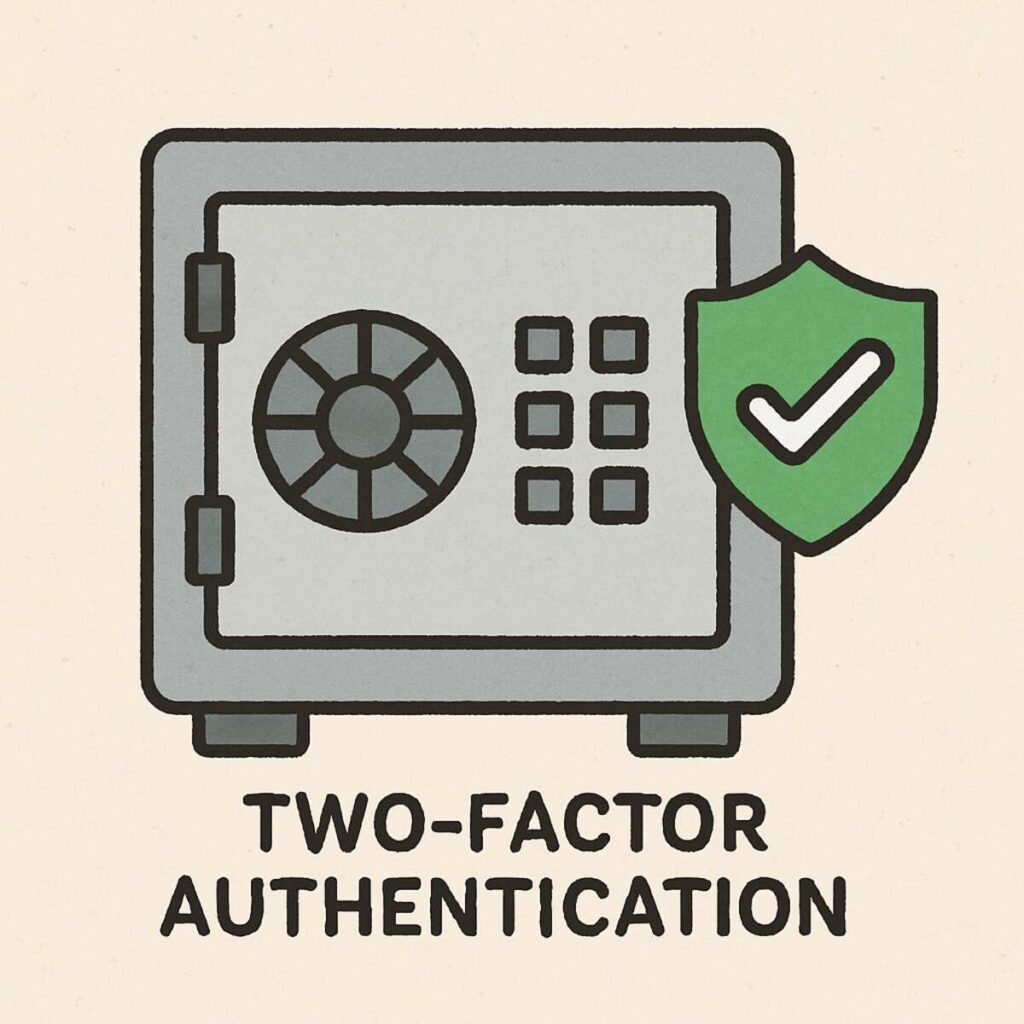
Protecting your capital means looking for four specific security “Must-Haves” before connecting your bank accounts:
- SIPC/FINRA membership: A vital safety net protecting your money if the brokerage itself fails.
- Two-Factor Authentication: A standard text or app code required to approve logins.
- Kill Switch feature: A prominent emergency stop button for all trading activity.
- API permission limits: Digital boundaries deciding exactly what your bot is allowed to do.
These features function exactly like everyday household safeguards. Think of API permissions as giving a house-sitter your front door key, but not the combination to your home safe; the bot gets permission to trade, but never to withdraw cash. While complex high-frequency software security protocols operate silently in the background, the Kill Switch puts you in absolute command. If the market suddenly acts strangely, tapping this switch pulls the emergency brake, instantly unplugging the bot before it makes another move.
With these essential protections locked down, you can comfortably explore the technology without fear of losing control.
The ‘Time Machine’ Method: Backtesting Strategies on Your Phone
Before risking a single dollar on your new “If-Then” rule, you naturally want proof that it works. Imagine serving a complex new dinner recipe to guests without ever tasting it first. Automated apps eliminate this dangerous guesswork by letting you run practice rounds using old market numbers. You get to see exactly how your strategy would have performed last month or even last year without spending a dime.
Running these historical simulations acts like a financial time machine in your pocket. You can ask the software, “If I used this rule during the wild market swings of 2020, what would have happened?” The app instantly crunches those past numbers to give you a clear answer. Industry experts call this process backtesting, and today, evaluating backtesting strategies on mobile platforms requires just a few screen taps.
Once your rule survives the past, you can test it in the present using virtual money. This safe environment lets you watch the app react to live price changes without touching your real bank account. Utilizing paper trading to test algorithms protects your cash by exposing flawed plans before they go live. It successfully shifts your entire approach from nervously guessing to confidently testing.
Taking the time to practice ensures you remain confident on your financial journey. You have learned the basic logic, secured your digital vault, and proven your ideas in a completely risk-free sandbox.
Setting Up Your First Bot: A Step-by-Step Guide
Transitioning from practice to live action is a surprisingly simple leap. If you have ever linked a checking account to a budgeting app, you already know the basics of how to set up stock trading bots. You are simply building a secure digital bridge between your new app and your existing brokerage account.
This connection relies on a digital handshake called an API. Think of it as a secure hotel keycard. Your app asks to place a trade, and your broker grants permission without ever revealing your actual passwords. Finding the best API for brokerage integration simply means picking a bot that safely links to mainstream brokers you already trust.
The actual setup process takes under ten minutes by following these steps:
- Choose a platform.
- Securely link your broker via API.
- Select a pre-made strategy.
- Set your ‘Safety Net’.
- Turn it on with a small test amount.
You remain in complete control, even as the software takes over the steering wheel. Watching that first live $50 trade execute automatically proves the system works while keeping your initial risk incredibly low.
The Safety Net: Using Risk Management Tools for Peace of Mind
Putting your money on autopilot might feel daunting, but you never have to fly without a parachute. Before your app makes its first move, you set a firm boundary that protects your cash if the market suddenly dips. This built-in floor acts like an automated insurance policy, ensuring you never lose more than you want on a single trade.
Financial experts call this boundary a Stop-Loss order. It is simply an automatic instruction saying, “If this stock drops by $10, sell it immediately to stop the bleeding.” Deciding this ‘Comfort Zone’ upfront establishes a healthy risk/reward ratio, which balances the cash you are willing to risk against your expected profit.
Relying on software for this exit offers a massive advantage over doing it yourself. When prices tumble, humans often freeze, hoping the stock will bounce back. An automated app feels no panic and triggers the sale in the blink of an eye. Using these accessible risk management tools for retail investors guarantees avoiding emotional bias in execution.
Letting a computer enforce your safety rules fundamentally changes how you experience the stock market. Instead of staring anxiously at a screen, you empower the math to do the heavy lifting.
Real Results: Manual vs. Algorithmic Investment Performance
Looking at the numbers behind manual vs algorithmic investment performance reveals a simple truth about human nature. We often assume investing requires predicting the future, but the real secret is consistency. When trading by hand, life interrupts—meetings run late, or hesitation creeps in right when you need to act. Software, however, operates like a tireless factory, executing your instructions without a single second of doubt.
This difference in reliability creates the “Consistency Gap” between human emotion and machine precision. You do not need to pick the absolute perfect stock to see your wealth grow. Instead, success comes from creating a solid plan and following it flawlessly. An app never gets bored or decides to gamble your funds on a random hunch, meaning your financial recipe is cooked perfectly every single time.
Small, disciplined actions naturally lead to better long-term outcomes through the snowball effect of compounding. If your digital assistant captures modest, consistent wins, those small amounts gradually add up and eventually start earning their own returns. Trying to match this steady rhythm manually usually leads to burnout, but an algorithm easily maintains the pace while you go about your daily life.
Achieving this steady growth does not mean you have to build a complex system from scratch. While some people enjoy setting up custom rules, you can also instruct your app to mimic the habits of established experts.
Social Trading: Copying Pros vs. Coding Your Own
Imagine your social media feed, but instead of liking vacation photos, you browse successful investment portfolios. This is copy trading, a feature on modern trading platforms acting like a financial “Follow” button. When your chosen expert buys Apple stock, your app automatically buys a proportional amount at the same time. You essentially hire a seasoned navigator to steer your ship hands-free.
Choosing that navigator requires a little homework before hitting follow. Smart users look for a history of steady growth rather than flashy, high-risk wins. They also check social sentiment—the overall mood of the crowd—to see if an expert’s strategy aligns with what everyday investors are feeling. This digital word-of-mouth helps you filter out gamblers and find a cautious professional matching your comfort zone.
Eventually, relying entirely on another person’s choices might feel too passive, prompting investors to weigh copy trading vs programmatic execution. This next step means graduating to your own “If/Then” recipes. Instead of hoping a stranger makes a smart move, you build a personal safety net saying, “If my stock drops five dollars, sell it instantly.” This logic-based approach shifts the decision-making power directly back to your own common-sense rules.
A brilliant strategy falls flat if your automated assistant reacts to old pricing, making real-time market data synchronization essential.
The Need for Speed: Real-Time Market Data Synchronization
Imagine streaming a live game, only to hear your neighbor cheer ten seconds before you see the touchdown. In the financial world, this information delay is known as latency, and it can make or break your automated strategy. When you set an “If/Then” rule to sell a stock before it drops too low, your app needs to see the price exactly as it is right now, not as it was a moment ago.
To prevent you from reacting to old news, trading apps use a constant digital heartbeat called real-time market data synchronization. This process works like a live news ticker, continuously refreshing prices in the blink of an eye. Without this instant connection, your carefully planned safety net might trigger late, causing you to sell at a lower price than intended.
Fortunately, you do not need million-dollar supercomputers to succeed. Wall Street professionals spend fortunes optimizing trade execution latency—shaving milliseconds off the time it takes an app to complete a trade. However, for everyday investors buying standard shares like Apple or Tesla, a reliable internet connection and a reputable app provide plenty of speed to keep your personal assistant running smoothly.
Now that your app has an instantly updated view of the market, it needs to know what clues to look for.
Speaking the Language: Technical Indicators for Simple Scripts
Having a fast connection to real-time prices is great, but raw numbers alone do not tell your app what to do. To make your “If/Then” rules work, your personal assistant needs a way to read the market’s overall climate. User-friendly apps let you use technical indicators for custom scripts, which act exactly like a financial weather report.
The true magic of algorithmic trading lies in translating this complex data into simple triggers. To read the market weather, you will typically rely on three basic tools:
- Moving Average (The Trend): This smooths out daily price zig-zags to show you the general direction a stock is heading, much like checking if the overall season is warming up or cooling down.
- RSI (Overheated Meter): The Relative Strength Index acts as a market thermometer. It tells your app if a stock has been bought too fast (overheated) or sold too much (too cold).
- Volume (Crowd Size): This counts the current trading activity, confirming if a price move actually has real energy behind it.
You can combine these tools just like setting a smart thermostat. For example, you might build a rule that says, “Only buy $100 of Apple if the current price is above the Moving Average.” By adding a second condition—ensuring the RSI thermometer isn’t showing “overheated”—you prevent your app from buying at the absolute peak.
Once your strategy can successfully navigate the market weather, your funds must remain protected from outside threats.
The Vault: Security Protocols for Retail Bots
When handing your money to a digital assistant, a natural question arises: are automated investment systems safe? Yes, provided your app acts like a digital fortress. Top-tier platforms protect data using 256-bit encryption, the exact same digital padlock used by major banks. Think of this as a virtually unbreakable vault that scrambles your personal information into unreadable code.
Boundaries are just as important as strong locks when managing your funds. Your app connects to your broker through an “API key,” which functions like a digital ID card for your software. Always select “Read-only API access” or trade-only permissions during setup. This ensures your bot can review prices and execute trades, but physically cannot withdraw your money. It operates exactly like a house sitter who is allowed to water your plants, but lacks the authority to sell your home.
A quick five-minute security audit guarantees you remain firmly in the driver’s seat. Simply open your app’s settings menu, confirm 256-bit encryption is active in their security policy, and verify your digital ID card explicitly blocks external transfers. You do not need to master complex high-frequency software security protocols; verifying basic encryption and API restrictions provides a massive safety net.
Staying Online: Why Cloud-Based Server Hosting Matters
We’ve all experienced the panic of a phone dying right when we need it most. If your trading software lives strictly on your personal laptop, a dead battery means your financial assistant instantly falls asleep on the job. This “local” setup creates massive risk, leaving your investments completely unprotected the second your Wi-Fi drops or your screen goes dark.
Moving your strategy off your personal devices solves this problem completely. By using cloud-based server hosting for bots, you rent a digital workspace in a massive, highly maintained facility that never loses power. Think of it like hiring a night watchman who sits in a storm-proof bunker, rather than relying on a cheap security camera plugged into your living room wall.
This constant connection guarantees “zero-downtime,” ensuring your safety net never fails. Imagine the market takes a sudden dip at 3:00 AM while your phone is turned off on your nightstand. Because reliable automated trading apps live in the cloud, they remain wide awake, successfully executing your protective “sell” rules before the drop worsens. You wake up to a simple notification, not a crisis.
Keeping your strategy online all day grants you ultimate peace of mind. Your autopilot runs consistently in the background, entirely insulated from everyday technical hiccups. However, staying online is only half the battle; that digital bunker still needs a secure phone line to communicate with your actual funds.
The Bridge: Finding the Best API for Brokerage Integration
Your automated assistant might live in a secure cloud, but it still needs a way to actually touch your investment account. This connection is called an API, acting as a digital bridge between your strategy and your money. Instead of logging in manually every time you want to buy or sell, this bridge allows both systems to pass instructions instantly.
Creating this safe crossing requires two specific items: an “API Key” and an “API Secret.” Think of the API Key as a digital ID badge identifying your specific account, while the API Secret acts as a master password. Together, they authorize your app to execute trades on your behalf without ever giving it permission to withdraw your cash.
Finding the best API for brokerage integration remains a critical hurdle. Many popular trading platforms simply do not allow automated assistants to plug into their systems. Before transferring any funds, always verify that your chosen broker explicitly advertises “API access.” A bot-friendly broker provides a reliable pipeline, ensuring your safety net triggers in the blink of an eye when market conditions change.
You now possess a complete system capable of managing your portfolio while you are away from your screen. However, testing it with practice money first prevents unnecessary panic.
Practice Makes Perfect: Paper Trading to Test Your Ideas
Your new automated assistant is fully wired and ready to go, but handing over your hard-earned cash on day one is completely unnecessary. Just like a pilot spends hours in a flight simulator before flying a real jet, you can test your automatic trading rules in a perfectly safe setting. This practice phase builds your confidence without risking a single dime.
Financial apps call this practice zone a “sandbox,” which functions exactly like the name suggests: a secure place to play and experiment. Inside this digital space, you use paper trading to test algorithms against live market conditions. The app supplies you with fake “Monopoly money,” but the stock prices you see moving up and down match the real stock market second by second.
Watching these simulated trades unfold helps you spot flaws in your “recipe” before they turn into expensive mistakes. If your rule says to buy a $100 stock when it drops suddenly, the sandbox reveals exactly how that instruction behaves during a chaotic afternoon. Many user-friendly systems even allow backtesting strategies on mobile platforms, letting you run your safety rules through last month’s historical data while you wait in line for coffee.
The transition from a successful simulation to a live portfolio requires a reliable, easy-to-navigate foundation.
The App Hunter: Choosing Your Platform Wisely
Stepping out of the practice sandbox means choosing your actual digital assistant, but not all software is created equal. The biggest mistake beginners make is falling into the “Black Box” trap. A black box algorithm operates like a restaurant that refuses to share its secret ingredients; the app makes decisions but entirely hides the underlying “If/Then” logic from you. For a genuinely safe experience, you need transparency in fintech, meaning the system clearly shows exactly why it bought or sold a stock on your behalf.
To find that clarity, you must explore the three main types of automated trading apps. You will encounter simple rule-builders, copy-trading services where your account mirrors experienced users, and advanced strategy creators. Whichever route you choose, the screen should feel as intuitive as your favorite mobile banking application, rather than a confusing airplane cockpit.
Never link your real money to any of these trading platforms without running them through this essential four-point checklist:
- Transparency: Can you easily read and edit the “recipe” the bot uses to trade?
- Security: Does the tool require bank-level encryption and two-factor authentication?
- Community: Are there active user forums or accessible support teams to help you learn?
- Cost: Will hidden monthly subscription fees eat up your small-account profits?
Once your chosen software passes these safety checks, you are firmly in the pilot’s seat alongside a trustworthy digital co-pilot.
Starting Small: Your First $100 Automated Trade
Moving from practice money to real dollars always causes a tiny spike in your heart rate. The best way to handle this psychological shift is by using a “training wheels” strategy. Fund your account with a small, stress-free amount, like $100. This ensures your digital co-pilot proves its reliability before taking on greater responsibility.
Establishing strict boundaries is the first step in learning how to set up stock trading bots safely. For this initial experiment, build a basic “recipe” for a familiar company like Apple. Tell the software to buy a share only if the price drops two percent, and set a safety net to sell if it drops another five.
Your biggest challenge during that first day is keeping your hands off the steering wheel. It is incredibly tempting to open your phone and check that tiny investment every five minutes. Instead, treat the software like a slow cooker and walk away for twenty-four hours. The true goal is letting the system execute your instructions while you enjoy your normal life.
When you finally review the results the next morning, the real value of automated trading apps becomes wonderfully clear. Whether the bot successfully bought a share or patiently waited because the market stayed flat, it followed your exact rules without any emotional hesitation. Experiencing this reliable consistency prepares you for a structured transition into automated investing.
Your Automation Roadmap: A 30-Day Transition from Manual to Managed
You used to view investing as a stressful chore of staring at charts, waiting for the perfect moment to act. Now, you hold the blueprints to manage a system that works on your schedule, giving you back your time and peace of mind.
Bridging the gap from curiosity to confidence with algorithmic trading for beginners does not require a computer science degree. It simply takes a structured, patient approach to building your new digital habits.
Start your transition by following The 30-Day Milestone Plan:
- Week 1 Education: Explore your app’s practice mode using simulated money.
- Week 2 Small Test: Build your first simple “If/Then” rule to see the digital handshake in action.
- Week 3 Refinement: Adjust your safety limits so you understand exactly how the system protects you.
- Week 4 Deployment: Fund your account with a small, comfortable amount and let the autopilot run.
By properly using risk management tools for retail investors, like safety-net sell orders, you maintain complete control over your boundaries if the market shifts. Remember that the software is just following your specific directions.
True success here is not measured by getting rich overnight, but by the unemotional consistency of sticking to your plan. Each time you let the app execute a trade based on your rules rather than your impulses, you will build deeper confidence in the process. By letting technology handle the tedious background work, you can step away from the screen, knowing your financial assistant is always on the clock.